

Last updated October 31, 2026
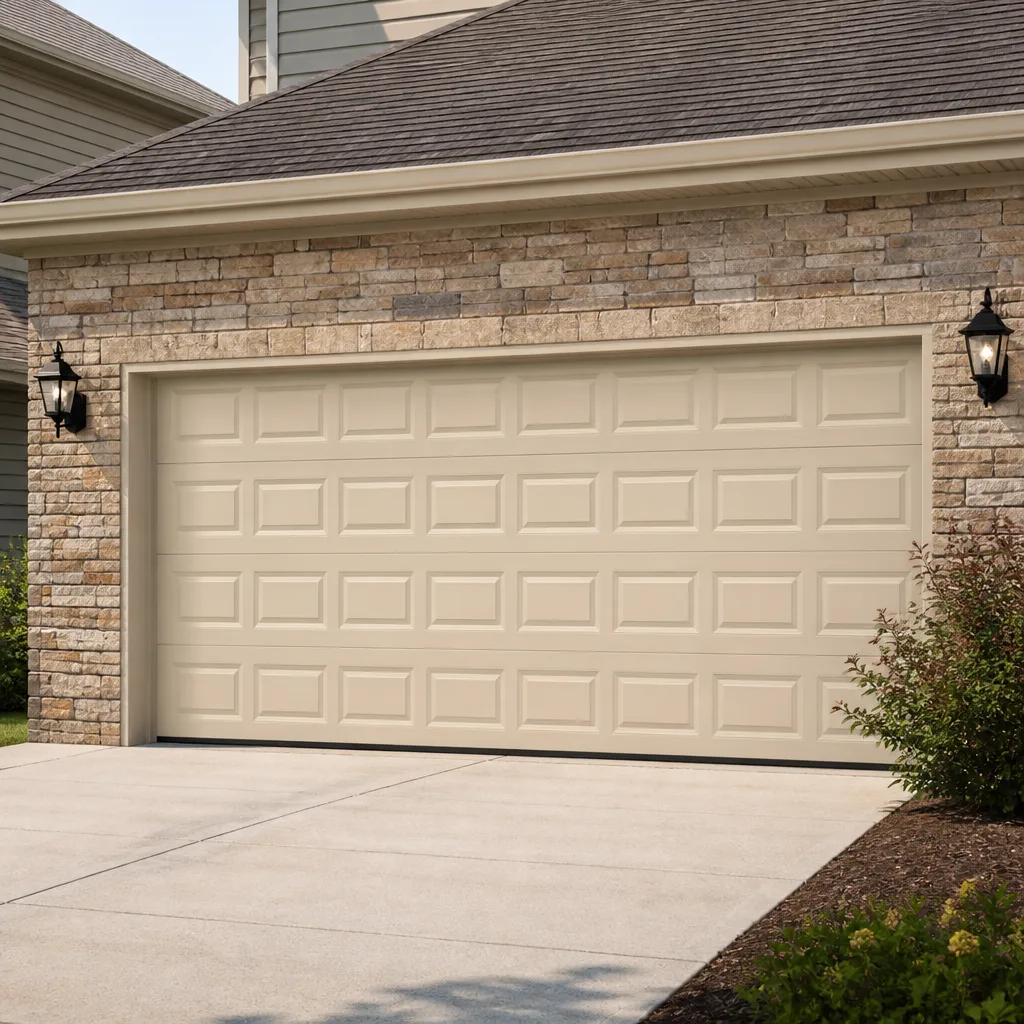 Raised-panel steel
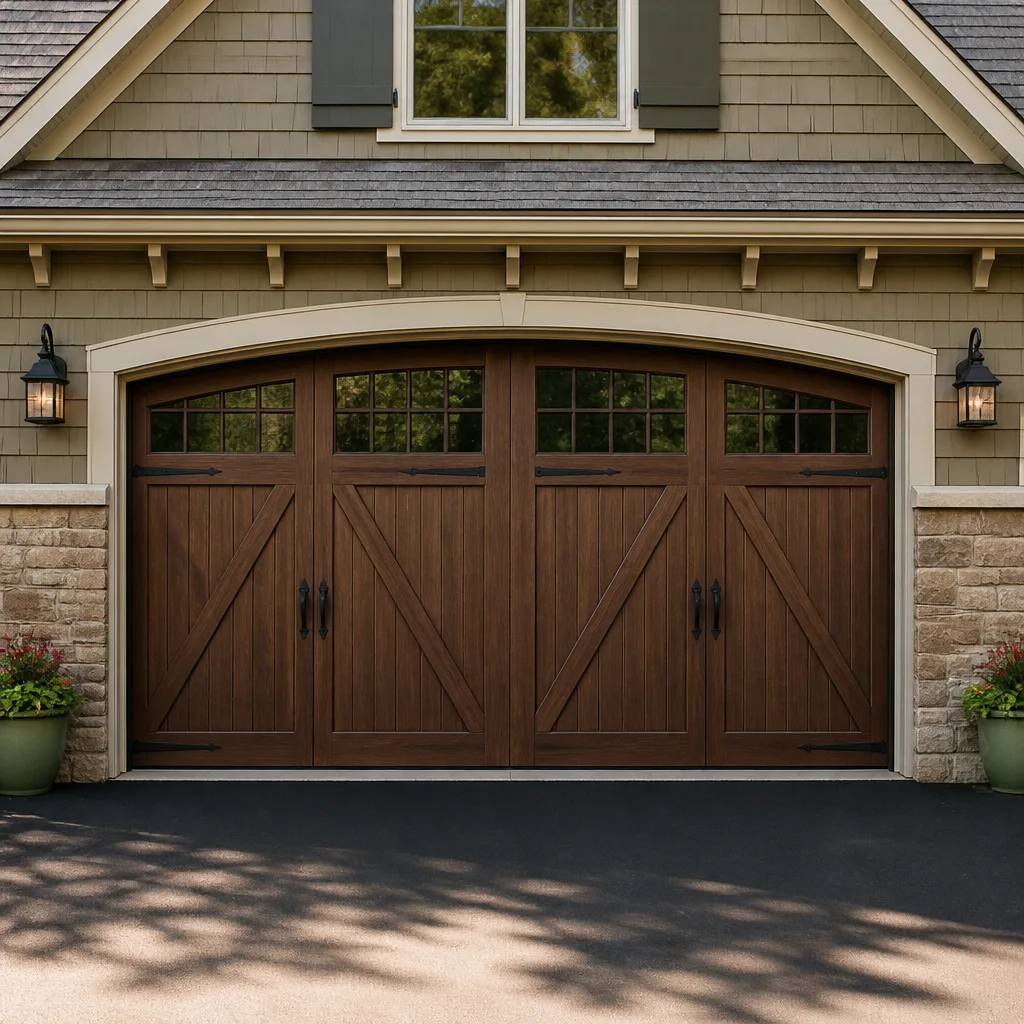 Carriage house
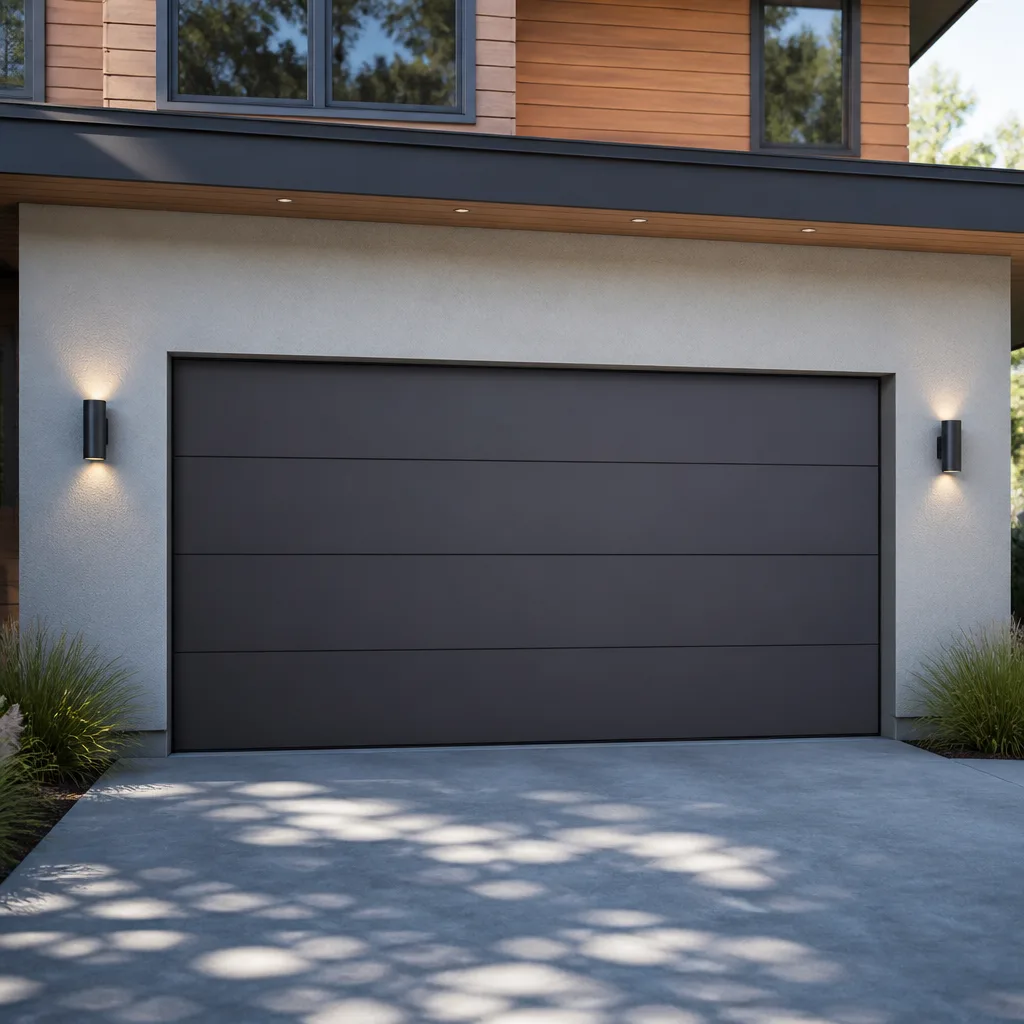 Modern flush
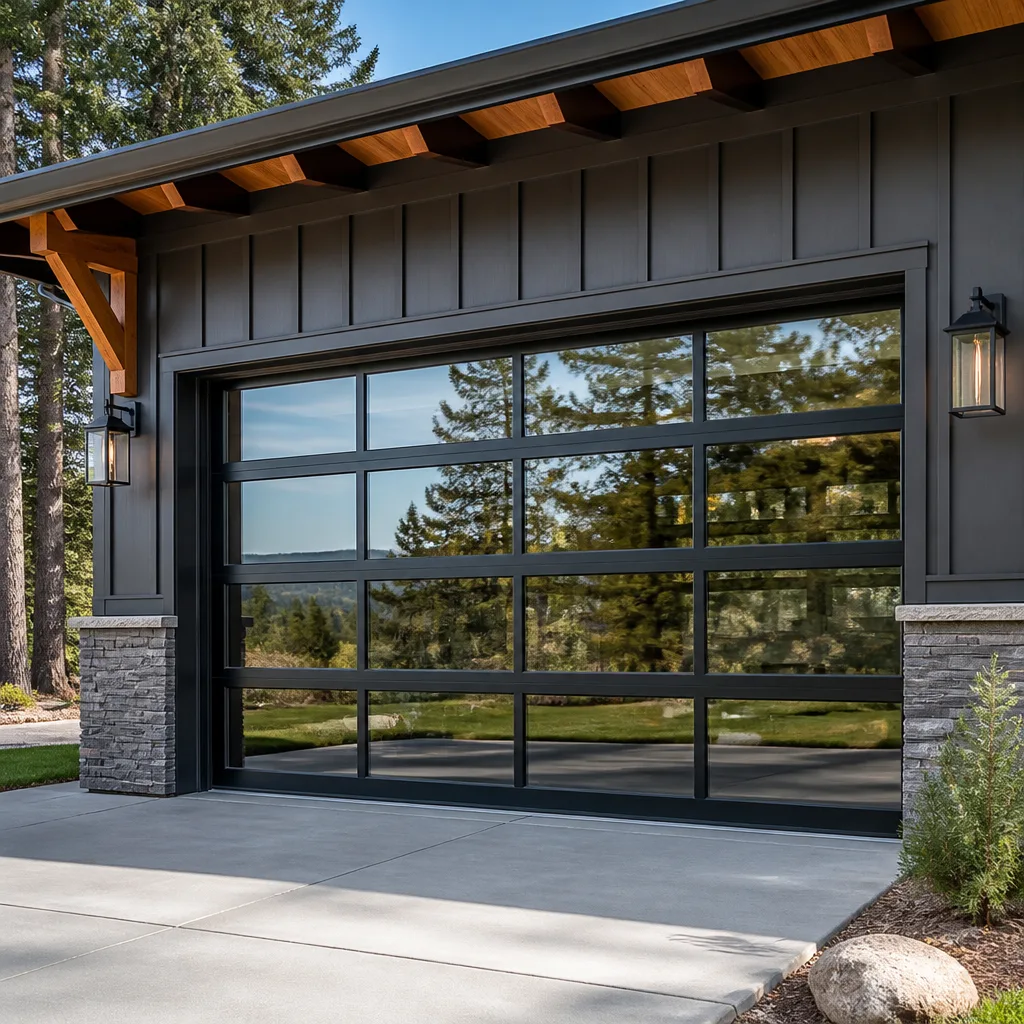 Full-view glass
 LiftMaster openers
 Chamberlain openers
Full 25-point door and opener safety check with every visit - springs, cables, rollers, tracks, and your LiftMaster or Chamberlain opener included
You get a price before we start. It does not change when the truck arrives.
Get your free estimateGarage Door Repair Maintenance Checklist for Sacramento Homeowners
The most expensive garage door repairs we see across Sacramento don’t happen suddenly. A torsion spring that snaps on a Tuesday morning in Midtown was losing tension for months before it failed. A stripped opener gear in Elk Grove was making a grinding noise for weeks. A bent track in Natomas was binding slightly every single time the door closed, until one day the rollers jammed completely. The frustrating part is this: almost every one of those failures had a detectable warning sign 3 to 6 months earlier. A basic, consistent checklist would have caught it. This guide is built around the specific failure patterns Sacramento homeowners actually experience, organized by consequence, not by component. You’ll learn what to check monthly, what to do seasonally, and what to leave alone entirely. Because some tasks on a garage door are homeowner maintenance, and some are a trip to our Garage Door Repair services.y room waiting to happen.
Quick Answer
The most important garage door maintenance task in Sacramento is a monthly visual and sound check of the door’s movement, springs, rollers, and auto-reverse function, done while the door opens and closes under normal use. Homeowners should lubricate nylon rollers with white lithium grease twice a year and check that the bottom seal flexes properly after the summer heat. Tasks involving spring tension, cable pressure, or limit-switch adjustment should be handled by a professional technician, not the homeowner.
Styles & brands we work with
Table of Contents
- The Sacramento Checklist: Ranked by Consequence of Neglect
- Monthly Tasks You Can Do in 10 Minutes
- Seasonal Tasks for Sacramento’s Specific Climate
- Using Sound and Resistance as Diagnostic Tools
- What Homeowners Should Do vs. What Requires a Technician
- The Annual Maintenance Log: Why Dates Matter
- Common Mistakes to Avoid
- When to Call a Professional
The Sacramento Checklist: Ranked by Consequence of Neglect
Most garage door maintenance articles list tasks alphabetically or by part. That’s not how failure works. A neglected bottom seal costs you a modest energy bill increase and maybe a few bugs in the garage. A neglected torsion spring costs you a $200 to $400 repair and a door that won’t open at all. So here’s the list as we actually think about it, based on what we’ve seen across Sacramento neighborhoods from Land Park to Carmichael: ranked by what it costs you if you skip it, most expensive first.
1. Torsion Spring Tension Loss (Annual Professional Check)
Torsion springs are the most dangerous component on any garage door system. They hold hundreds of pounds of torque, and when they fail, they fail violently. In Sacramento’s dry climate, the metal sees less rust than in coastal cities, but the heat cycling we get every summer still takes a toll on spring metallurgy over a decade or two. A spring that hasn’t been inspected in years can snap without warning. The failure cost is $250 to $420 for a pair of springs, installed. The inspection cost is usually part of a standard tune-up.
What you’re looking for: a visible gap in the coils, rust accumulation at the ends, or a door that suddenly feels heavier when you lift it manually. If you see any of these, call a professional before the spring fails completely. This is not a judgment call. This is physics.
2. Opener Gear Wear on LiftMaster and Chamberlain Units (Sound Check)
Sacramento homes built in the 1990s and 2000s overwhelmingly have LiftMaster or Chamberlain chain-drive openers. Those openers use a plastic gear inside the motor housing that connects the motor to the chain sprocket. That gear is a wear item. In our experience, it starts to fail between years 8 and 12, depending on door weight and how often the door cycles. The warning sign is distinctive: a grinding or buzzing noise when the opener runs, not the normal mechanical whir. Catch it early and the repair is a $120 to $180 gear replacement. Ignore it and the gear shreds completely, often taking the chain sprocket with it, which pushes the repair into the $300 range or forces an opener replacement.
The monthly sound test catches this. More on that below.
3. Track Alignment and Fastener Loosening (Visual + Resistance Test)
Garage door tracks in Sacramento homes get bumped. Kids hit them with bikes. Cars clip them in tight two-car garages. The bolt holes on the track brackets elongate over time, especially on the vertical sections. A track that’s just slightly off true makes the door bind on its rollers every single cycle. That binding is friction, and friction is heat, and heat is premature roller failure. A track that’s severely off can send a door flying off its rollers entirely.
Check this monthly: when the door is halfway up, look at the gap between the door edge and the track on each side. It should be consistent. If one side is tighter than the other, call a technician.
4. Auto-Reverse Sensor Misalignment (Bi-Weekly in Summer)
The photo-eye sensors at the bottom of each track are the single most important safety feature on any automatic opener made after 1993. They’re supposed to be level, clean, and aligned. In Sacramento, the issue is heat. As the garage door, track, and mounting brackets expand and contract with daily temperature swings, sensors mounted on those brackets drift slightly out of alignment. A sensor that’s just a few degrees off will interrupt the door’s closing cycle, causing it to reverse or stop mid-close. It’s not broken. It’s just drifted.
You should test this every month, but we recommend more often during the peak heat season (late June through September). The test is simple: close the door, and wave an object across the sensor beam while the door is descending. The door should reverse immediately. If it doesn’t, or if the door won’t close at all, the sensors need alignment.
5. Roller Deterioration (Bi-Annual Visual)
Garage door rollers are either steel with ball bearings or nylon with ball bearings. Nylon rollers are quieter and smoother, but they’re still wear items. In Sacramento’s dry air, the grease inside the roller bearings dries out faster than it would in a humid climate. A dry roller grinds instead of rolling. Eventually the bearing seizes, and the roller starts sliding along the track instead of rolling. That’s when you get a screaming metal-on-metal noise and a door that moves in a jerky, uneven motion. Roller replacement is usually $100 to $180 for all rollers, and it’s one of the best value repairs we do.
6. Bottom Seal Deterioration (Seasonal Check)
The rubber gasket on the bottom of the door keeps dirt, water, and bugs out of the garage. In Sacramento, the summer sun bakes that rubber until it becomes brittle. Once it’s brittle, it cracks. Once it cracks, it leaves a gap. Once there’s a gap, you get dust, leaves, and critters. Sacramento’s dry summer is specifically hard on door seals. Check the seal in May and again in September. Press on it with your thumb. If it feels hard and unyielding instead of soft and flexible, it’s time to replace it. A new bottom seal is $80 to $140 installed.
Monthly Tasks You Can Do in 10 Minutes
The monthly check doesn’t need to be elaborate. It takes ten minutes, and it’s the difference between catching a problem early and paying for the full repair later. Here’s what we recommend, in order:
- Open and close the door fully once. Stand inside the garage, watch the door travel, and listen. It should move smoothly, without jerking, hesitation, or bounding. Listen for any grinding, popping, or scraping sounds.
- Listen for the opener’s normal sound. A Chamberlain or Genie opener that’s running properly sounds like a consistent mechanical hum. A grinding noise means the gear is stripping. A chattering noise means the chain is loose. Every motor has a signature. Learn yours.
- Check the auto-reverse. Close the door with a 2×4 or a broomstick on the ground under it. The door should reverse when it hits the object. Next, wave an object across the photo-eye sensor beam while the door is closing. It should reverse immediately. If either test fails, stop using the opener and call for repair.
- Look at the torsion springs. This is a visual inspection only. Look for a gap in the coils, rust flakes, or any sign that one spring is wound tighter than the other. Touch nothing. Just look.
- Check the balance. Pull the red emergency release cord (with the door closed). Manually lift the door. It should lift smoothly and stay where you put it, roughly mid-travel. If it drops, the springs are losing tension. If it’s difficult to lift, the same. Reconnect the opener afterward.
If all five checks pass, you’re in good shape. If any single check fails, don’t wait. The failure you’re hearing is usually the failure you’ll be paying for in three to six months. For more detail on what to listen for, see our Garage Door Repair Troubleshooting: Common Problems and How to Fix Them.
Seasonal Tasks for Sacramento’s Specific Climate
Sacramento doesn’t have four seasons the way the Midwest does. It has two: hot and dry, and mild and wet. The maintenance tasks shift accordingly. A checklist written for Chicago or Seattle doesn’t map perfectly onto Sacramento’s climate, so here’s the local version.
Spring (March to May): As the weather warms up, check the bottom seal for cracking from the previous year’s heat. Apply white lithium grease to the roller bearings and hinges, but wipe off the excess so it doesn’t attract grit. Test the auto-reverse sensors carefully: the spring temperature swings between 45-degree mornings and 75-degree afternoons are enough to cause slight alignment drift on older sensor brackets.
Summer (June through September): This is the hardest season on a Sacramento garage door. The metal tracks expand, the rubber seal bakes, and the opener motor runs hotter than at any other time of year. During peak heat, check the sensor alignment at least twice a month. Listen for new sounds from the opener: heat accelerates gear wear. If you can, avoid opening and closing the door during the hottest part of the day, especially if the door faces west or south. The direct Sacramento sun can make the door panels hot enough to feel uncomfortable to the touch, and the extra heat increases the strain on every moving part. Learn to spot problems early with our Garage Door Warning Signs: A Sacramento Homeowner’s Reference Guide.
Fall (October and November): After the heat breaks, do a full lubrication pass: rollers, hinges, and the opener chain if it’s a chain-drive LiftMaster or Chamberlain. Check the bottom seal again. Look for any signs that summer heat loosened the track bolts: a door that suddenly feels different from last spring is telling you something. This is the best time in Sacramento to schedule a professional tune-up, because the weather is mild and the door has just come through its hardest season.
Winter (December through February): Sacramento winters are mild, but the cold and moisture change door behavior. Metal contracts, which can make a previously quiet door suddenly pop or creak. Condensation on metal parts can lead to surface rust, especially on unprotected springs. If you hear a new sound in the winter, it’s usually metal-to-metal friction that wasn’t there in the fall. Wipe down the tracks with a dry cloth and apply a thin coat of lubricant to the roller bearings. And remember: Sacramento’s winter is when the door seals do their least work, but it’s a good time to inspect the door’s perimeter for any gaps that might let in cold air.
Using Sound and Resistance as Diagnostic Tools
You don’t need special tools to diagnose a garage door. You need your ears and your hands. The door and the opener make a consistent sound and deliver a consistent resistance when everything is working correctly. Any change in that pattern is information.
Think about your garage door like a car. If your car starts making a new noise, you notice it. If the steering feels heavier than it did last month, you notice it. The garage door is no different, except that most people never learn their door’s baseline sound. So here’s how to establish one: stand in the garage with the door closed, press the opener button, and just listen. That’s your door’s signature. A properly functioning opener (LiftMaster, Chamberlain, Genie, whatever you have) produces a smooth, consistent mechanical hum. A properly functioning door produces a low rumble as the rollers travel the track. No popping, no grinding, no squealing.
If you hear a grinding noise from the opener, that’s the plastic drive gear stripping. It happens to chain-drive units after years of use, and it only gets worse. If you hear a popping or cracking sound from the spring area, that’s the torsion spring winding or unwinding under load, and it means the spring is near the end of its life. If you hear a metal-on-metal scrape, that’s usually a roller bearing that has failed and the roller is now sliding along the track. Each sound points to a specific failure.
Resistance works the same way. Pull the red release cord and lift the door manually. A properly balanced door lifts with one hand, stays in place when you let go, and feels consistent through the entire travel. A door that feels heavy at the start but light at the top has a spring issue. A door that binds at the same spot every time has a track or roller issue. Your hands know more than you think they do.
What Homeowners Should Do vs. What Requires a Technician
There’s a line between maintenance and repair, and it’s not always obvious. Here’s the line as we draw it, based on what we’ve seen happen when that line gets crossed.
Tasks a Sacramento homeowner can do safely:
- Lubricating nylon rollers with white lithium grease (sparingly, and wipe off excess)
- Wiping down tracks with a dry cloth
- Tightening visible hinge and bracket bolts that are already loose
- Testing the auto-reverse function
- Checking the bottom seal for flexibility and cracking
- Visually inspecting the springs (looking, not touching)
- Replacing the bottom seal gasket, if they’re comfortable with basic tools
Tasks that require a trained technician. No exceptions:
- Adjusting, replacing, or winding torsion springs. A torsion spring under tension holds enough stored energy to cause severe injury or death if it releases. This is not a YouTube tutorial situation. We mean this. The wound spring is the single most dangerous component in a residential garage door system, and every year someone in the Sacramento area is seriously injured trying to adjust one.
- Adjusting or replacing cables. The cables work in tension with the springs. Like springs, they carry enormous force. A snapped cable can whip violently.
- Adjusting limit switches. The limit switches tell the opener where to stop. Setting them incorrectly can cause the door to over-travel, damage the panel, or strain the opener motor.
- Track realignment. Tracks need to be plumb and square. Loosening the track bolts without the correct support can cause the door to come off track entirely.
- Opener gear replacement. The opener motor housing has to be disassembled. The gear itself is inexpensive; the labor is specific, and getting it wrong means a dead opener.
The Annual Maintenance Log: Why Dates Matter
When a Sacramento homeowner calls us for a Garage Door Repair in Sacramento, we ask the same questions: when did you first notice the noise? Has the door been moving slower than it used to? Did the problem start suddenly or gradually? Most homeowners can’t answer. They don’t remember. That’s normal. Everyone forgets.
An annual maintenance log fixes this. Keep a simple sheet of paper in the garage, or a note on your phone. Every time you do the monthly check, write down the date and a few words: “No issues” or “Chain chattering when opening” or “Door feels heavier than last month.” That’s it. When you call a technician, hand them the log. Knowing that the door started binding in March and got progressively worse through June tells us something specific. It tells us exactly where to look. For more guides & resources, visit our blog.
Here’s a basic monthly log format, printable and put on the wall next to the door opener:
- Date: [month/year]
- Door balance: [normal / heavy / drifts]
- Opener sound: [normal / grinding / other]
- Auto-reverse test: [pass / fail]
- Spring visual: [normal / gap / rust]
- Notes: [any new symptoms]
This looks simple, and it is. The value doesn’t come from the individual entries. It comes from the pattern over time. A door that starts drifting in April and fails a balance test in September is telling you exactly what’s wrong. You just need the record to hear it.
Common Mistakes to Avoid
- Lubricating with WD-40. WD-40 is a solvent, not a lubricant. It cleans and degreases. On garage door rollers and hinges, it strips away the existing lubrication and leaves the metal dry. Use white lithium grease or a dedicated garage door lubricant instead.
- Ignoring a grinding opener because the door still works. The gear is already stripping, and every cycle removes more material. The sooner you fix it, the cheaper the repair. A grinding LiftMaster or Chamberlain opener is a diagnostic message, not a cosmetic issue.
- Attempting DIY spring adjustment after watching an online video. We’ll say it again: torsion springs are stored potential energy, and the release of that energy is not something a homeowner should experience. The cost of a professional spring replacement is a fraction of a hospital bill.
- Painting over the bottom seal. The rubber seal flexes every time the door closes. Paint makes it rigid, and rigid rubber cracks. This is a surprisingly common mistake in Sacramento, where homeowners repaint their garage door and accidentally coat the seal.
- Forgetting to test the auto-reverse after cleaning the sensors. Cleaning photo-eye sensors is good. But if you bump the sensor bracket while cleaning, you’ve misaligned it. Always run the wave-test after any cleaning or adjustment.
- Assuming a new door doesn’t need maintenance. A new Clopay or Wayne Dalton door is well-built, but it’s still a mechanical system with moving parts. Rollers, springs, and openers all wear. New doors need lube and checking just like old ones, usually starting after the first year.
- Using the garage door as a shortcut during the hottest part of the day. In peak Sacramento summer, every cycle adds heat and wear. If you’re coming and going frequently between 2 and 6 p.m., and you have a west-facing door, you’re asking more of your opener than it was designed to give. Enter through the front door when practical.
When to Call a Professional
If your monthly check turns up anything outside the normal baseline, call a professional. If you hear grinding from the opener, call. If the door feels heavy or won’t stay in place, call. If the springs show a visible gap or rust, call. If the auto-reverse test fails, stop using the opener and call immediately. These are not maintenance items. They’re repair items.
Carlton Garage Door Repair offers free estimates in Sacramento and the surrounding area. Our technicians are brand-fluent across 8 major manufacturers, including LiftMaster, Chamberlain, Genie, Clopay, Amarr, Wayne Dalton, Craftsman, and Raynor, so we’re familiar with the system you already own before we arrive. Whether you need Garage Door Opener Repair in Sacramento or a full Garage Door Installation in Sacramento, we’re equipped to handle the job without subcontracting. Call (833) 589-6808 to schedule an inspection.
See the difference
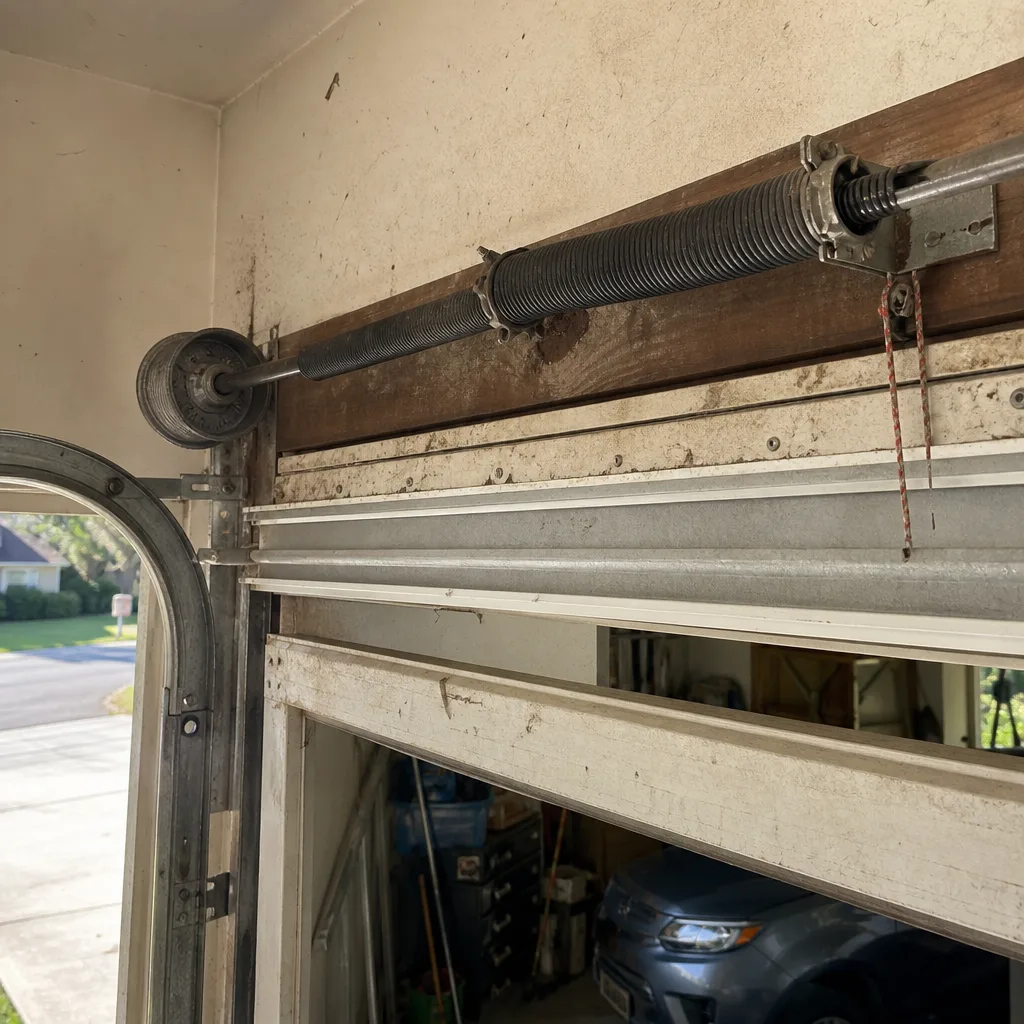 Before
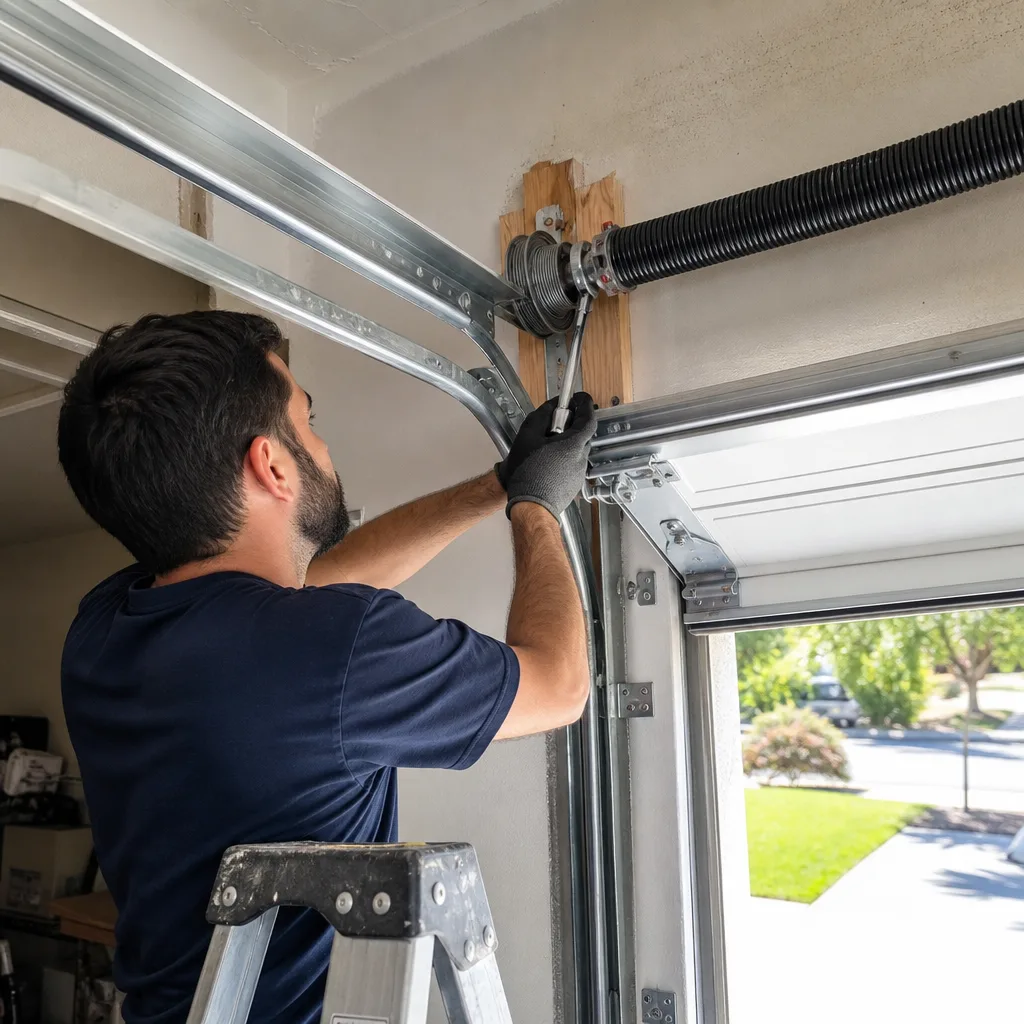 After
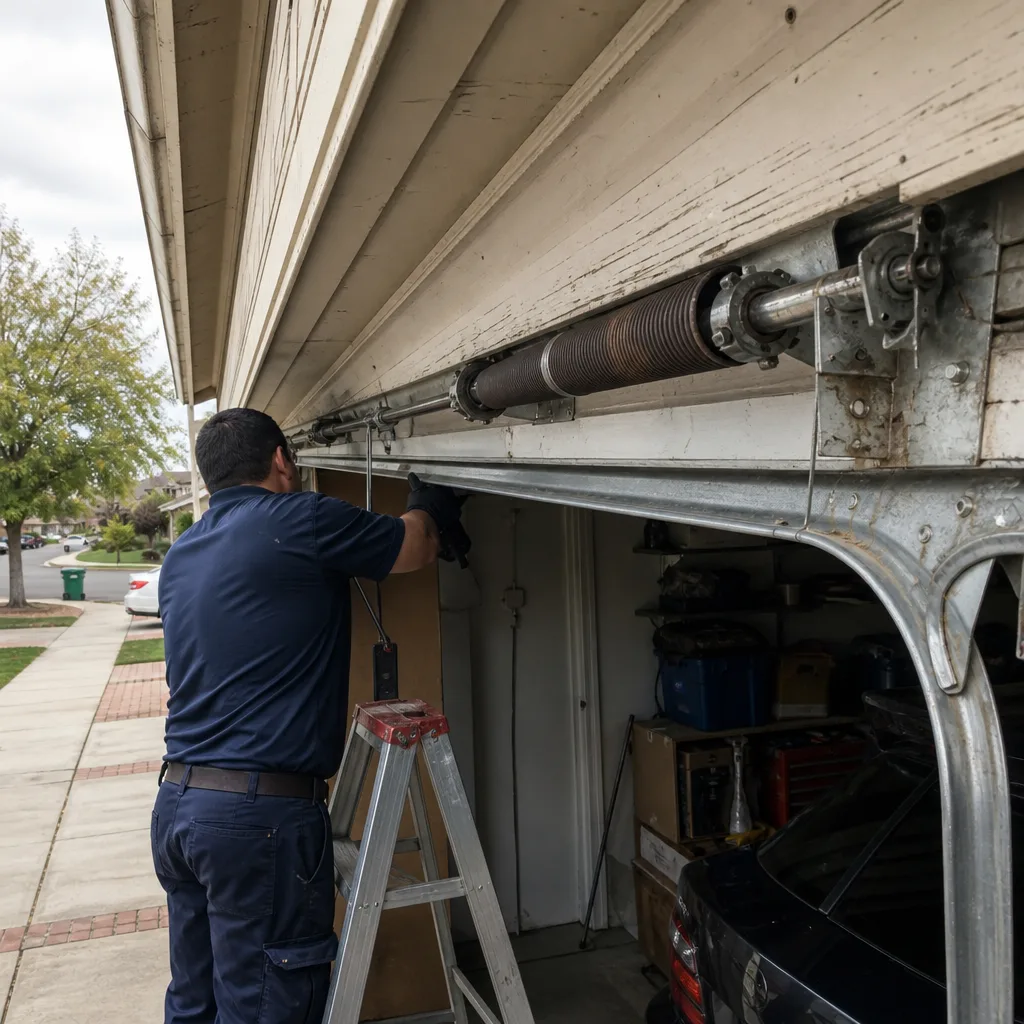 Before
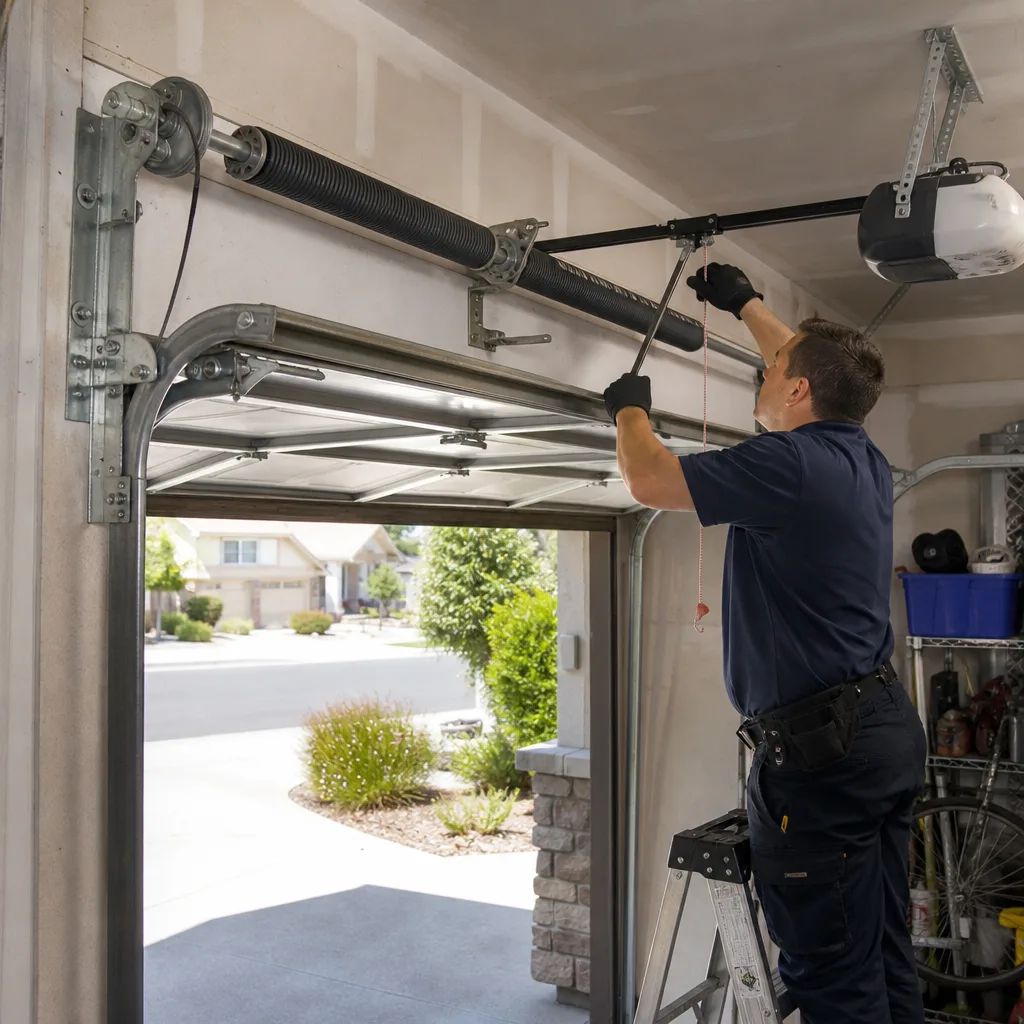 After
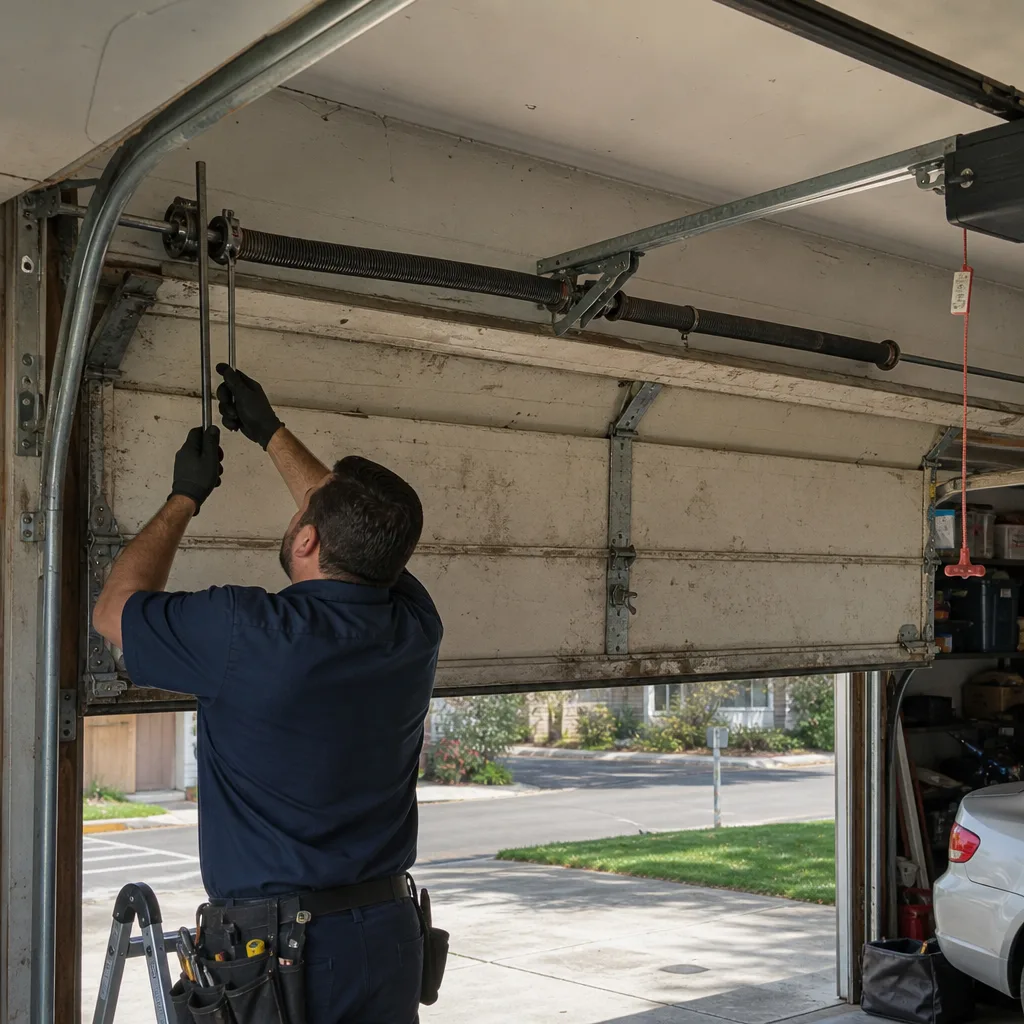 Before
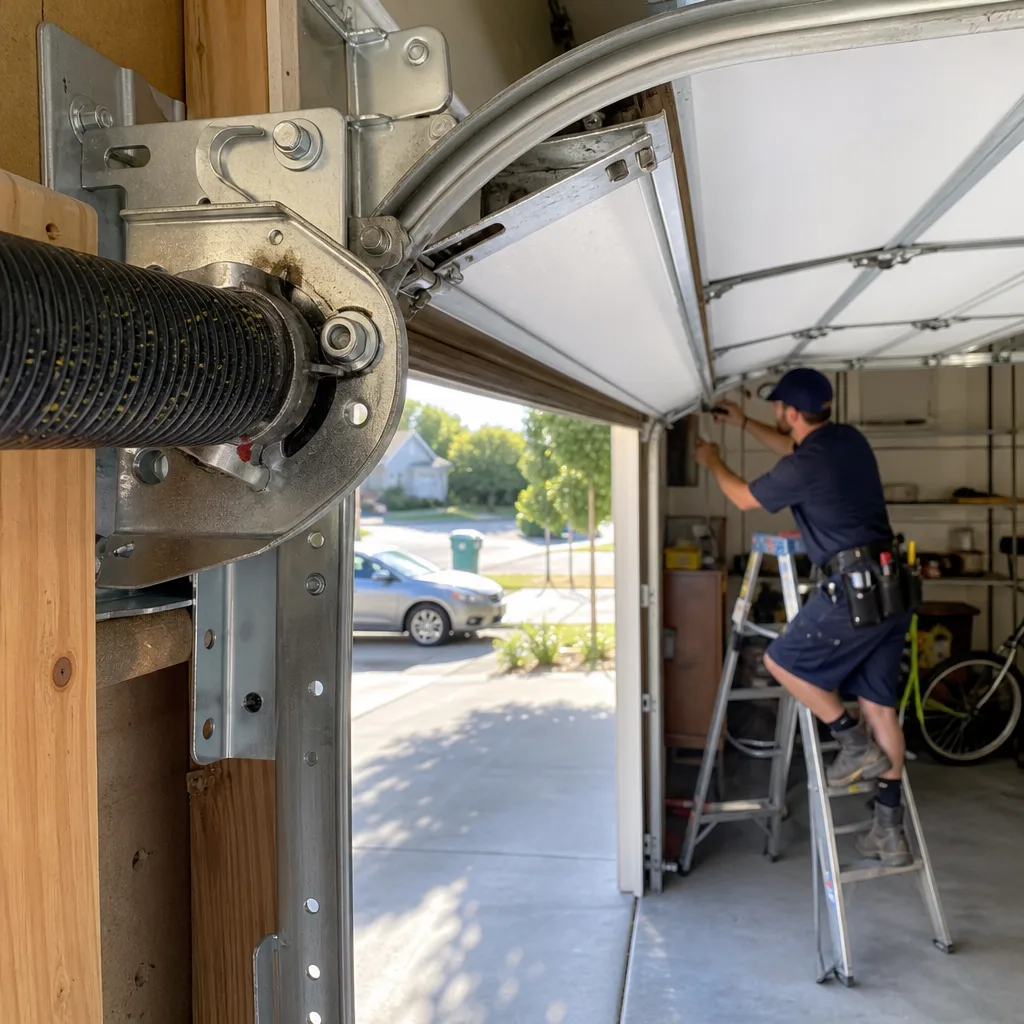 After
Frequently Asked Questions
Twice a year is right for Sacramento’s climate: once in the spring as the weather warms up, and once in the fall after the summer heat has broken. Use white lithium grease on roller bearings and hinges, and wipe off excess to avoid attracting grit. If your door faces west or gets direct afternoon sun, you may want to lubricate a third time in July or August.
A standard garage door tune-up in Sacramento typically runs between $80 and $150, depending on the door type and opener age. Most professional tune-ups include spring inspection, roller lubrication, track alignment checking, and sensor testing. Call (833) 589-6808 for a free estimate on a tune-up for your specific door and opener.
Broken torsion springs are the most common garage door failure we see in Sacramento. The combination of age, dry heat, and regular daily use takes a toll, and most springs last 7 to 12 years before failing. The second most common issue is opener gear wear on older LiftMaster and Chamberlain chain-drive units.
No. Torsion springs hold hundreds of pounds of tension, and the energy released during an improper adjustment can cause severe injury. This is a job for a trained professional with the correct winding tools. The cost of a professional spring replacement is far lower than the cost of an emergency room visit, and the repair is done correctly the first time.
In most cases, a garage door that reverses when closing is triggered by misaligned or dirty photo-eye sensors. Sacramento’s temperature swings can cause sensor brackets to drift slightly, especially on older doors. Test the sensors by cleaning the lenses with a dry cloth and checking that they’re level and facing each other. If the problem persists, call for a professional opener diagnostic.
Standard torsion springs are rated for 10,000 cycles, which works out to roughly 7 to 12 years for most Sacramento homeowners, depending on how often the door is opened and closed each day. If your door has been in place for more than a decade and the springs have never been replaced, schedule an inspection. Catching a failing spring before it breaks is always cheaper than replacing it after.
The Bottom Line
A garage door is a mechanical system, and like any mechanical system, it rewards consistency. Ten minutes a month, a little white lithium grease twice a year, and a maintenance log on the wall next to the opener. That’s the whole program. The homeowners who do it catch their failures early and pay for $100 repairs instead of $400 replacements. The homeowners who don’t end up with a door that won’t open on the morning they need to leave for work. Your garage door is the largest moving object in your Sacramento home. Treat it like you expect it to keep moving. Start the monthly check today, and when something doesn’t sound right, call a technician before it stops sounding like anything at all. Carlton Garage Door Repair offers free estimates in Sacramento. Call (833) 589-6808 today. For more on our services, visit the Carlton Garage Door Repair home page.
Written by the team at Carlton Garage Door Repair, serving Sacramento since 2012.