

Last updated October 31, 2026
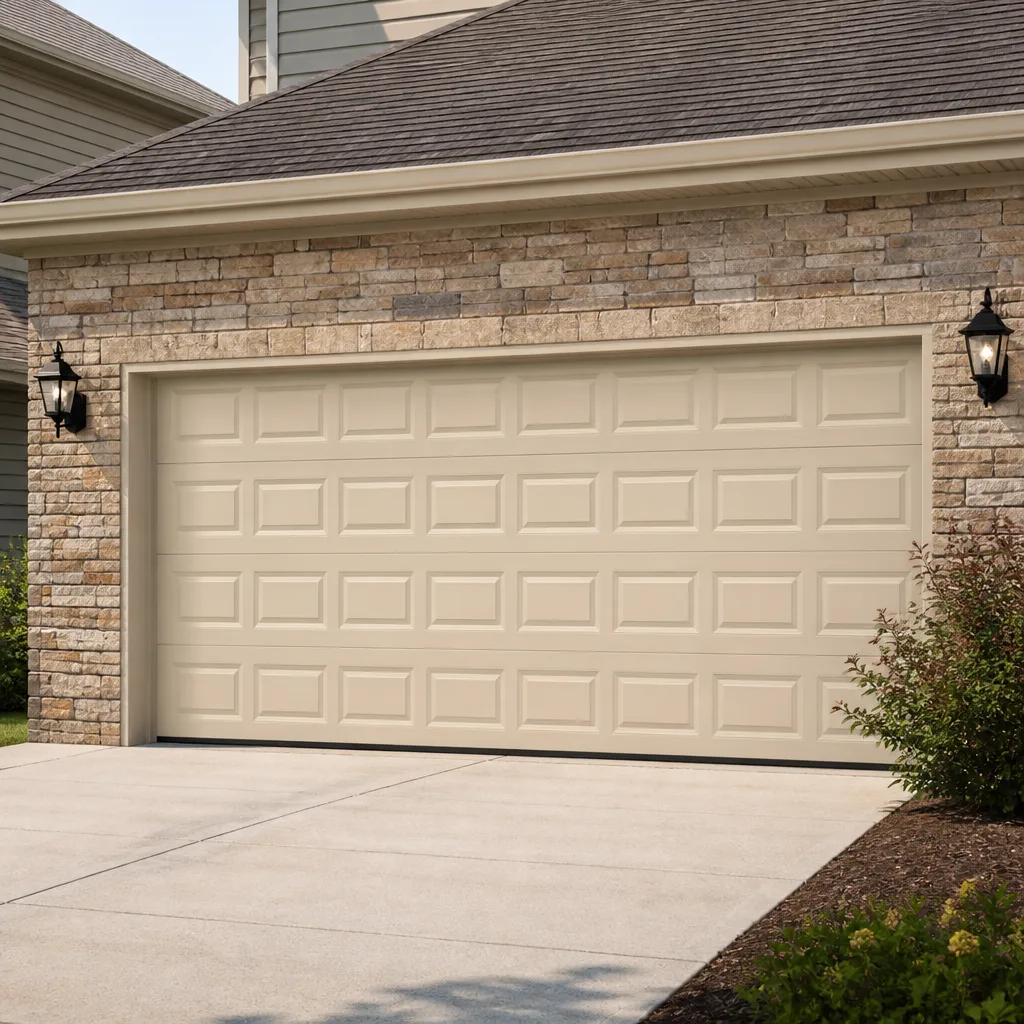 Raised-panel steel
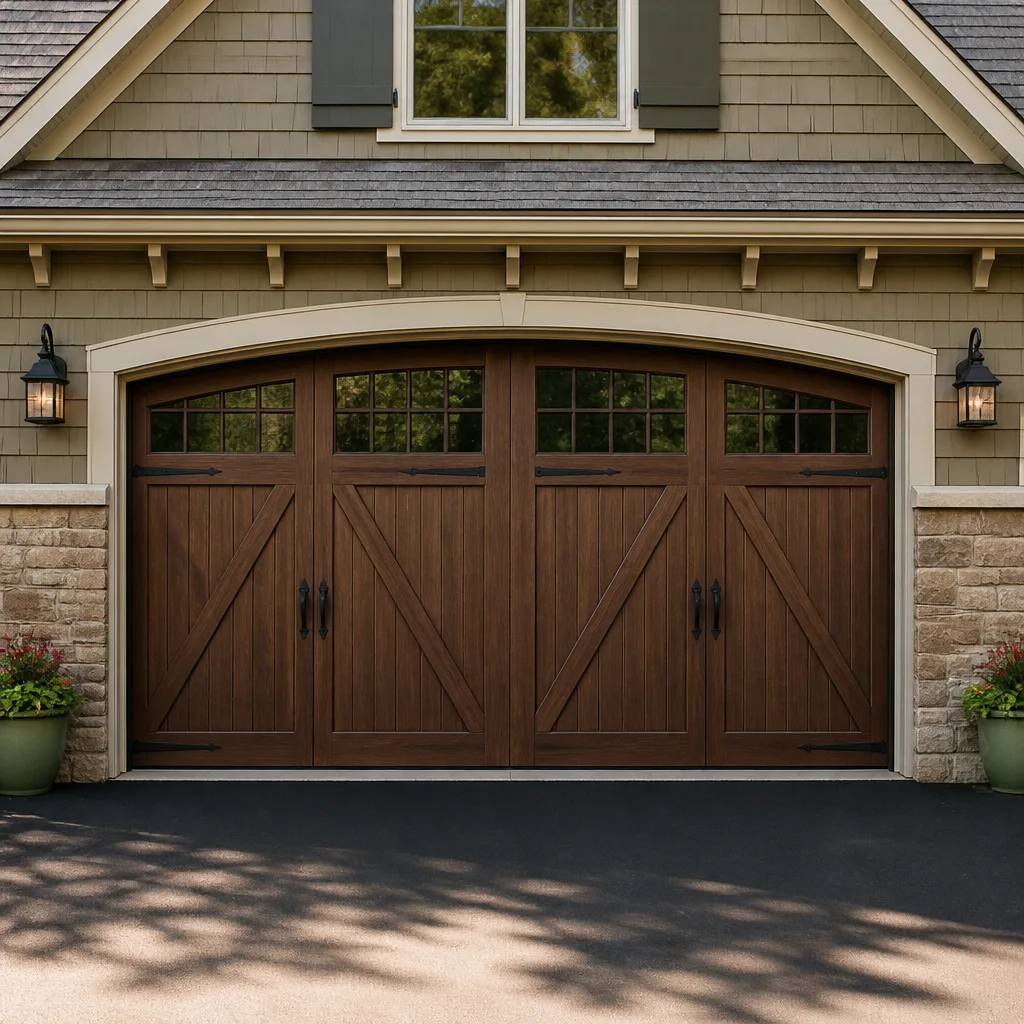 Carriage house
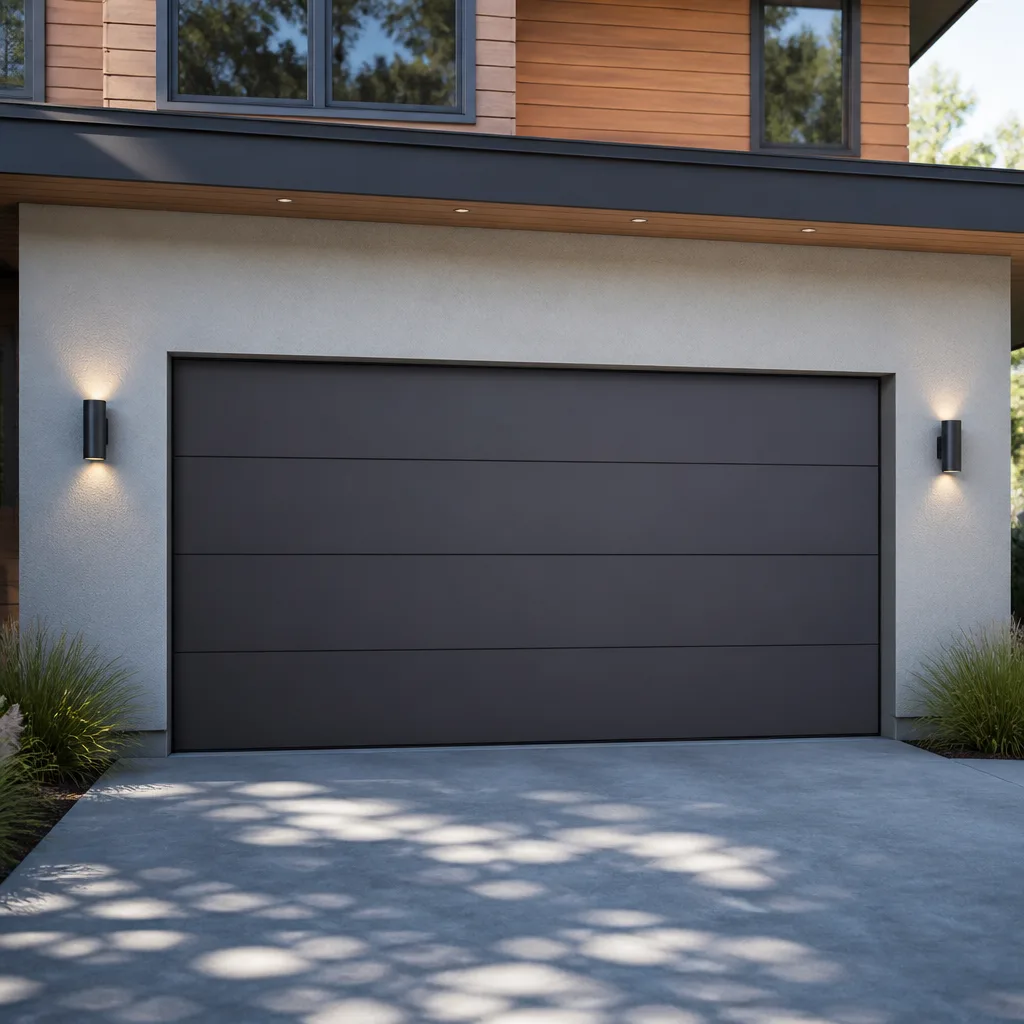 Modern flush
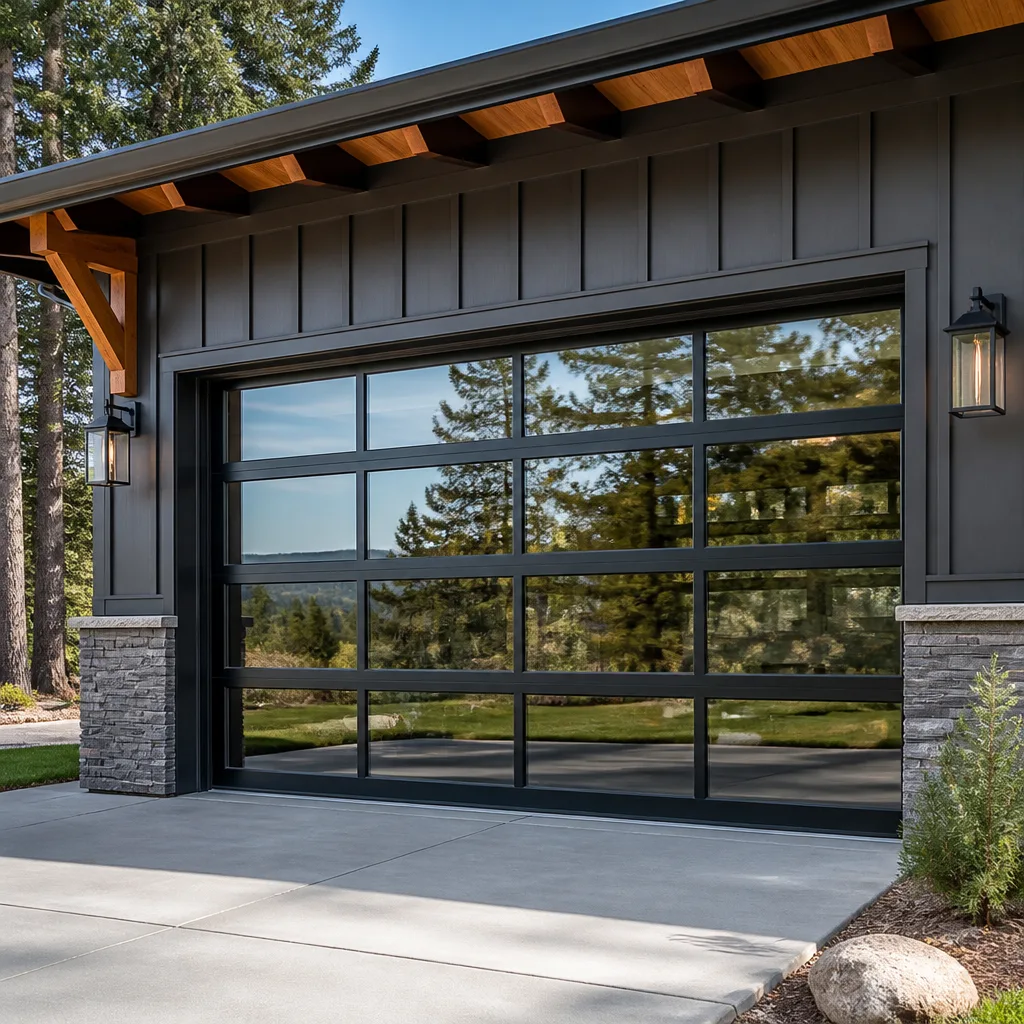 Full-view glass
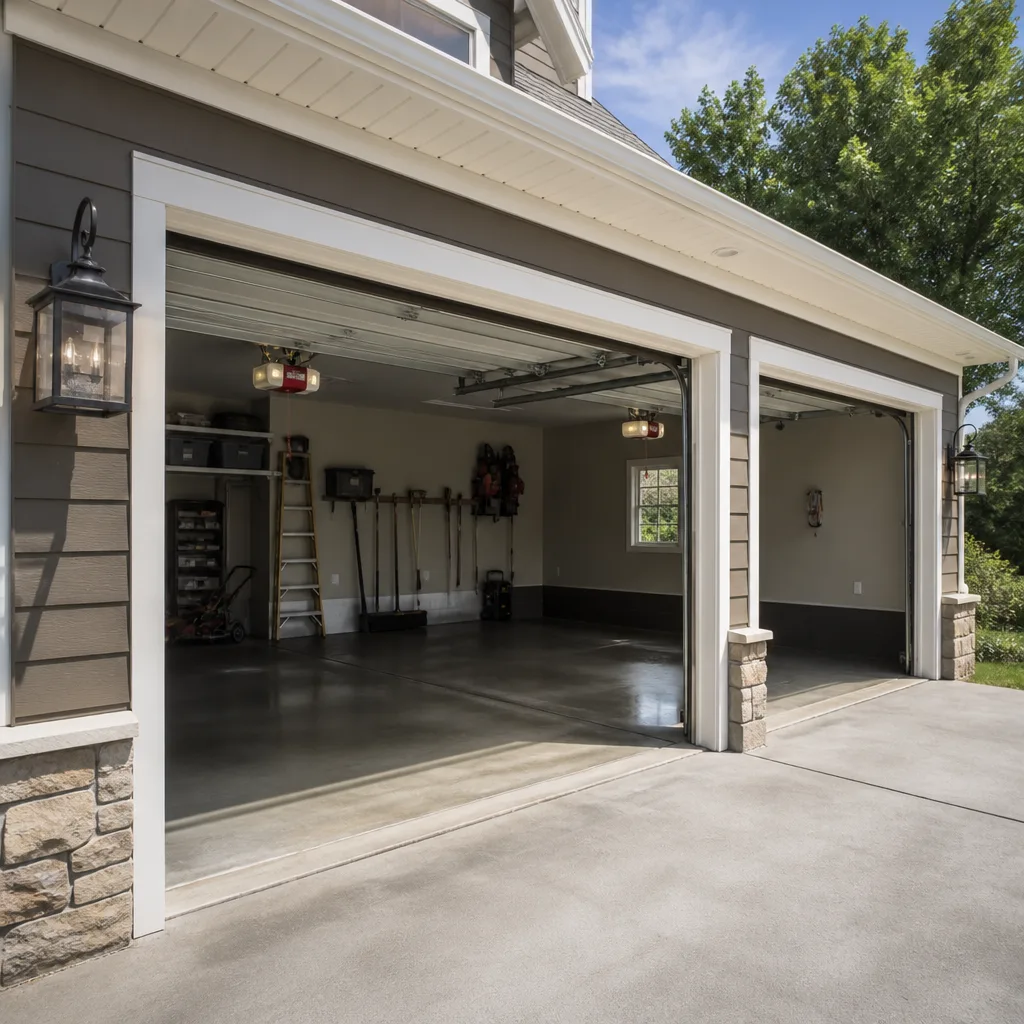 LiftMaster openers
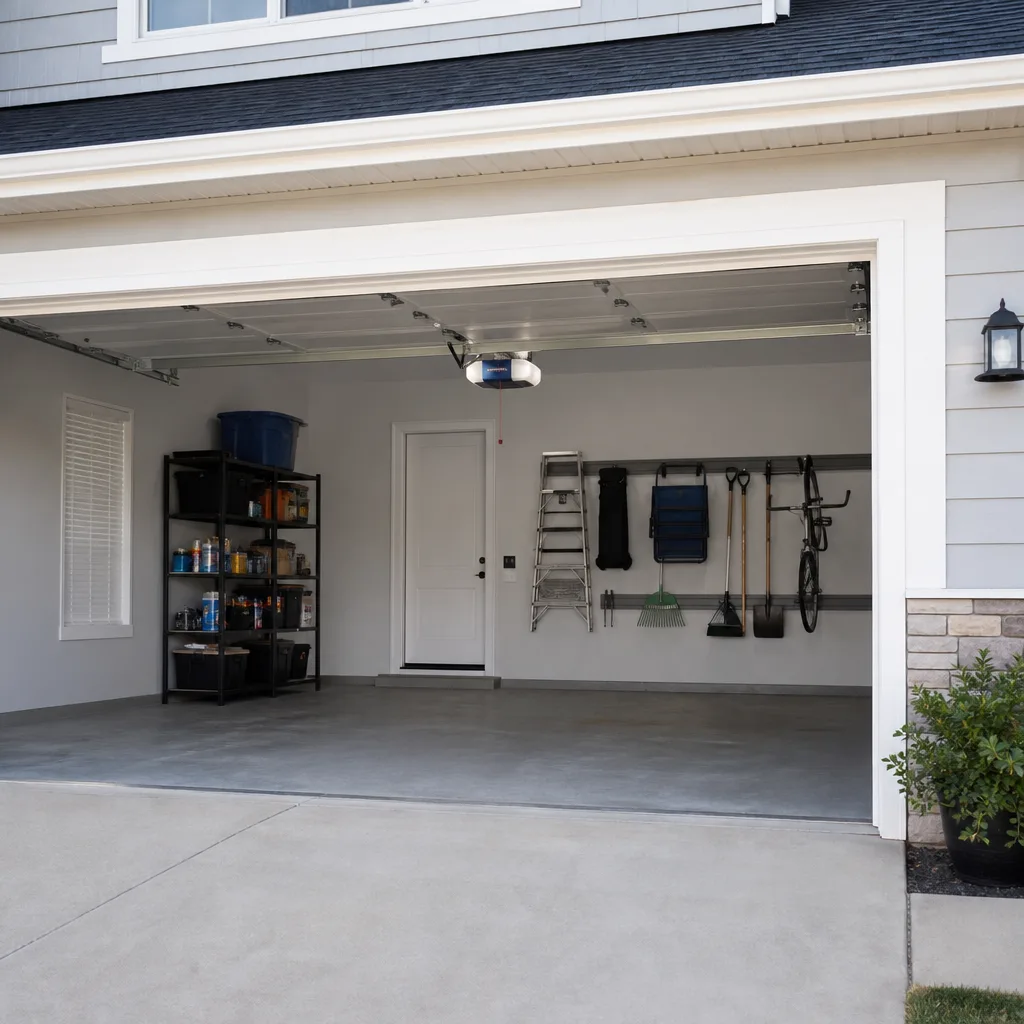 Chamberlain openers
Full 25-point door and opener safety check with every visit - springs, cables, rollers, tracks, and your LiftMaster or Chamberlain opener included
You get a price before we start. It does not change when the truck arrives.
Get your free estimateThe Complete Guide to Garage Door in Sacramento
Sacramento’s Central Valley heat regularly warps door panels and degrades torsion spring lubrication faster than manufacturers’ maintenance schedules account for, yet most garage door guides are written for temperate climates. This one isn’t. We’ve spent years working on doors across Land Park, East Sacramento, Natomas, Elk Grove, and every neighborhood in between, and we can tell you exactly what Sacramento’s climate, soil, and housing stock do to your garage door system. By the time you finish reading, you’ll understand how to evaluate your current door, what repairs actually cost in this market, when replacement makes more sense than another fix, and how to choose a contractor who won’t steer you toward a product you don’t need.
Quick Answer
The right garage door for Sacramento is one that handles 100°F+ summer heat, resists the slow frame shift caused by expansive clay soil, and works with an opener compatible with your home’s era of construction. Most Sacramento homes built between the 1970s and early 2000s need either a steel door in the 24-26 gauge range with proper insulation or a door with reinforced stiles that tolerates frame movement. For repairs, the smartest first step is a diagnostic visit from a technician who works across multiple brands rather than one who only sells one manufacturer’s product line.
Styles & brands we work with
Table of Contents
- Why Sacramento’s Climate Is Harder on Garage Doors Than You’d Think
- Clay Soil, Frame Shift, and the Alignment Problem Nobody Mentions
- What Your Home’s Build Era Says About Your Garage Door System
- Material Breakdown: Steel, Wood Composite, and Aluminum Rated for Sacramento
- Repair vs. Replacement: The Real Tipping Points
- Opener Compatibility and the Smart Opener Question
- How to Evaluate a Contractor’s Brand Range
- What Garage Door Work Costs in Sacramento
Why Sacramento’s Climate Is Harder on Garage Doors Than You’d Think
Sacramento sits in a climate zone that cycles between extremes. Summer brings weeks of triple-digit temperatures, often peaking above 105°F in July and August. Winter delivers damp, cool conditions with overnight lows in the 30s and persistent morning fog. That swing stresses every component of a garage door system. Metal panels expand in the heat and contract in the cold. Torsion springs lose lubrication faster when heat thins the grease and dust from dry summers mixes into it. Weatherstripping dries out and cracks within two to three years instead of the five to seven you’d see in coastal climates.
We regularly see doors in Sacramento neighborhoods like Arden-Arcade and Citrus Heights with panel warping that has nothing to do with physical impact. A dark-colored steel door facing west can reach surface temperatures approaching 160°F on an August afternoon. That heat radiates through the panel, and over several seasons, the metal can develop a visible bow. Lighter colors and insulated cores reduce this, but they don’t eliminate it. If you’re choosing a new door, this is a Sacramento-specific reason to avoid the darkest color options unless the door includes a polyurethane insulated core that resists warping.
The other climate factor is dust. Sacramento’s dry summers generate fine particulate that settles into tracks, hinges, and roller bearings. Combined with thinning spring grease, that dust creates a grinding paste that accelerates wear. A maintenance visit in early fall, before the rainy season starts, catches this before it becomes a mid-winter failure.
Clay Soil, Frame Shift, and the Alignment Problem Nobody Mentions
Here’s something most garage door guides never address: Sacramento’s expansive clay soil moves. It swells during winter rains and shrinks during summer drought. Over decades, that movement shifts concrete slabs and can push garage door framing out of square. The result is a door that binds at one corner, leaves a gap at the bottom, or scrapes against the jamb on the way up.
In our experience, homes built on the older clay-heavy soils of Sacramento’s central neighborhoods, including parts of Tahoe Park, Colonial Heights, and Hollywood Park, show this more than newer developments on engineered fill. The first thing we check on an older Sacramento home isn’t the spring or the opener. It’s whether the door still sits square in its opening. A door that was perfectly balanced in 1995 may be fighting its own tracks in 2026.
What does frame shift actually require? Sometimes nothing more than adjusting the track brackets and rebalancing the spring tension. But if the slab has moved enough, the track may need to be shimmed or the door’s bottom seal replaced with a thicker profile to close the gap. This isn’t something a quick spring swap fixes, and it’s a perfect example of why a repair quote should come from someone who’s actually looked at the door, not someone reading symptoms over the phone.
What Your Home’s Build Era Says About Your Garage Door System
Sacramento’s housing stock didn’t grow evenly. Different decades produced different garage configurations, and each era has its own common failure points. Knowing yours helps you understand what to expect.
1950s-1960s: Older neighborhoods like South Land Park and some parts of Rancho Cordova feature single-car garages with low headroom. These spaces were built for one-piece tilt-up doors or early sectional doors with minimal track radius. Modern belt-drive openers often won’t fit without either a low-headroom track kit or a wall-mount opener. If your ceiling sits tight against the top of the door when it’s open, this is your situation.
1970s-1980s: The tract home boom produced two-car garages with 7-foot doors and wood panel construction. Many of these doors have been replaced at least once by now, but the openers are often original or second-generation chain-drive units. The tracks are typically sound, but the door panels themselves are heavy and the springs are frequently undersized for the weight.
1990s-2000s: This era gave Sacramento its sprawling suburbs in Folsom, Elk Grove, and north Natomas. Homes from this period usually have 8-foot doors, steel panels, and the first generation of screw-drive and belt-drive openers. The common issue we find is opener logic board failure and spring fatigue from the heavier steel doors installed during this period.
2010s-present: Newer builds have taller doors, smart opener wiring, and factory-installed insulation. The doors themselves are generally sound, but the openers often rely on Wi-Fi connectivity that fails when the router is on the opposite side of the house. We also see more wall-mount jackshaft openers in these homes, which require different diagnostic procedures than traditional trolley units.
Material Breakdown: Steel, Wood Composite, and Aluminum Rated for Sacramento
Choosing a door material for Sacramento means optimizing for heat tolerance, moisture resistance, and weight. Here’s how the three practical options perform in this specific climate.
Steel (24-26 Gauge)
Steel remains the most common choice, and for good reason. A 24-gauge steel door with a polyurethane core handles Sacramento summers well, resists impact from bikes and basketballs, and requires minimal maintenance. The key specification to check is the gauge. A 26-gauge door costs less but dents more easily and transmits more heat. By contrast, a 24-gauge panel with at least a 2-inch insulated core holds up better under direct afternoon sun. Clopay and Amarr both offer solid options in this range, and we’ve installed both across Sacramento with reliable results.
Wood Composite
Real wood looks beautiful but struggles in Sacramento’s dry-heat-and-damp-winter cycle. Solid wood doors expand and contract enough that we’ve seen panels crack along the stiles after only a few years, especially on west-facing exposures. Wood composite doors use a compressed fiber core with a molded grain finish, which gives you the look without the movement problem. They’re heavier than steel, though, so spring sizing matters. If you want the wood aesthetic in Sacramento, composite is the practical choice. Real wood is a maintenance commitment that most homeowners don’t budget for.
Aluminum
Aluminum doors are lightweight and corrosion-resistant, which sounds appealing. But they dent easily, offer little insulation, and transmit heat quickly. We rarely recommend them for attached garages in Sacramento. The exception is a detached garage or carport enclosure where panel weight is a structural concern and thermal performance doesn’t matter. For most Sacramento homes, aluminum is the wrong tool for the job.
Repair vs. Replacement: The Real Tipping Points
Every homeowner eventually faces the question: fix it again or replace it? In Sacramento’s market, where labor rates run consistently with other major California metros, the math works out like this.
Repair when:
- The door is less than 12 years old and the panels are structurally sound
- The problem is a single component: one spring, a set of rollers, a hinge, a cable
- The tracks are straight and the door still balances when the spring is removed
- The opener is less than 8 years old and the issue is a replaceable part like a gear, capacitor, or logic board
Replace when:
- The door has visible panel damage on more than one section, or the bottom section is rusted through
- The frame has shifted enough that the door can’t be made square without re-framing
- Repair costs for the current problem exceed about 50% of a comparable new door installed
- The door is a single-skin steel panel with no insulation, and your garage is attached to the house
- Springs have been replaced twice, which usually means the door weight is stressing every other component
The “50% threshold” is a useful rule, but it’s not arbitrary. Once you cross it, you’re investing in a door that’s already living on borrowed time. The next failure, whether it’s a spring or a panel, pushes your total spend past what a new door would have cost. For a complete look at how our repair service approaches these decisions, see our Garage Door Repair in Sacramento page.
Opener Compatibility and the Smart Opener Question
Garage door openers have evolved faster than the doors they move. If your home was built before 2010, chances are your opener predates the smart home era. That doesn’t mean it needs replacing, but it does mean you should understand what you have.
The three opener drive types:
- Chain drive: The old standard. Loud but dependable. Most common in Sacramento homes built before 2000. Parts are widely available, and repair is straightforward.
- Belt drive: Quieter operation, suitable for garages under or adjacent to bedrooms. More common in homes built after 2005. Chamberlain and Genie both produce reliable belt-drive models.
- Wall-mount (jackshaft): Mounts beside the door instead of overhead. Frees ceiling space and works with low-headroom and high-lift track configurations. Increasingly common in newer Sacramento builds and in garages with storage lifts.
Smart openers with Wi-Fi connectivity, like those using LiftMaster’s myQ platform or Chamberlain’s connected apps, are now standard on mid-range and premium models. But here’s the Sacramento-specific catch: older tract homes from the 1970s through 1990s often have opener outlets on shared circuits. A smart opener that draws power for Wi-Fi and battery backup can trip a breaker that’s already running a garage fridge and a workshop outlet. We’ve seen this enough times to mention it. If you’re adding a smart opener to an older home, check the circuit load first.
Opener repair deserves to be treated as its own specialty. A door that moves freely by hand but won’t respond to the opener tells you the problem is in the logic board, the safety sensors, or the drive mechanism, not the door itself. For more on how we approach opener-specific diagnostics, see our Garage Door Opener Repair in Sacramento page.
How to Evaluate a Contractor’s Brand Range
Here’s something most guide won’t tell you: the brands a contractor carries tell you exactly what kind of service you’re going to get. A shop that sells one opener brand and one door brand has an incentive to recommend what they sell, regardless of what your home actually needs. That’s not dishonest, it’s just structural.
We service the brand you already own. That’s the filter we recommend you apply to any Sacramento contractor. Ask this set of questions:
- How many door manufacturers do you work with regularly? If the answer is one, you’re getting one company’s product line, not a market comparison.
- Can you source parts for my existing opener, or will you need to sell me a new one? A technician with broad parts access can fix a Chamberlain opener with a Chamberlain part. A specialist who only stocks one brand may suggest replacement when repair would work.
- Do you repair openers as a dedicated service, or only as a add-on to door work? Opener repair is its own discipline. Logic boards, safety sensors, and drive gears require diagnostic experience that’s separate from spring and track work.
- What’s your process when a door is repairable but the customer asks about replacement? The right answer is a repair quote first, with replacement as an option. If the contractor skips straight to replacement pricing, that’s a signal.
Carlton Garage Door Repair works across eight major manufacturers, including Clopay, Amarr, Chamberlain, and Genie. That range matters not because any one brand is best, but because it means we’re familiar with your system before we arrive, and we can recommend the fix that fits rather than the product that’s in stock. For a complete overview of how we approach installation projects across multiple brands, see our Garage Door Installation in Sacramento page.
What Garage Door Work Costs in Sacramento
Prices in Sacramento track with the broader California market, though there’s meaningful variation between a basic steel door installation in a newer subdivision and a custom wood-grain composite door on a 1960s ranch with low headroom. Here’s a realistic range based on what we see across the region:
| Service | Typical Range (Sacramento) | Notes |
|---|---|---|
| Spring replacement (single) | $180 – $340 | Includes both springs when replacing a pair |
| Panel replacement | $300 – $700 | Depends on panel size and door brand |
| Opener repair | $120 – $320 | Parts and labor; varies by repair type |
| Full opener replacement | $450 – $900 | Includes labor; varies by drive type |
| Basic steel door installed | $1,200 – $2,400 | 16×7, no insulation, standard track |
| Insulated steel door installed | $1,800 – $3,400 | 24-gauge, polyurethane core |
| Custom wood composite installed | $3,200 – $6,500 | Includes paint or stain-ready finish |
Every price we quote is confirmed before work begins. You’ll know the number, and the work won’t start until you’ve agreed to it. No surprises when the final invoice arrives. If you want a specific quote for your door, call us at (833) 589-6808. Estimates are free.
One more Sacramento-specific note: labor rates in Folsom, Roseville, and Rocklin run slightly higher than the city core, which can add 10-15% to installation projects. The difference isn’t dramatic, but it’s worth knowing if you’re getting quotes from multiple companies and one seems unusually cheap.
Common Mistakes to Avoid
- Skipping the annual maintenance visit. Sacramento’s dust and heat cycle means springs that should last 10,000 cycles often fail at 7,000 without lubrication. A yearly check catches wear before it becomes a broken spring on a Monday morning.
- Choosing a door by color without checking insulation. A dark, non-insulated steel door on a west-facing Sacramento garage will make the garage interior noticeably hotter. Color matters, but insulation matters more.
- Replacing an opener when only the logic board failed. A competent opener technician can replace a logic board for far less than a full opener. We see homeowners quoted $600 for a full replacement when a $200 board swap would have fixed it.
- Ignoring slow frame shift. A door that scrapes on one side isn’t just noisy. It’s putting lateral load on the rollers, the hinges, and eventually the spring. In Sacramento’s clay soil, this develops slowly and gets worse every year.
- Going with the cheapest spring replacement quote. Low-grade springs wound on undersized coils fail faster in Sacramento’s heat. The cheapest quote often costs more per year of service life.
- Assuming your 1990s-era wiring can handle a smart opener. As noted above, older Sacramento homes often share a circuit between the garage opener and other outlets. Check the load before you buy.
- Calling a single-brand dealer for a diagnostic. You’ll get a recommendation within that brand’s catalog, whether or not it’s the right fit for your home. A multi-brand technician can compare options honestly.
See the difference
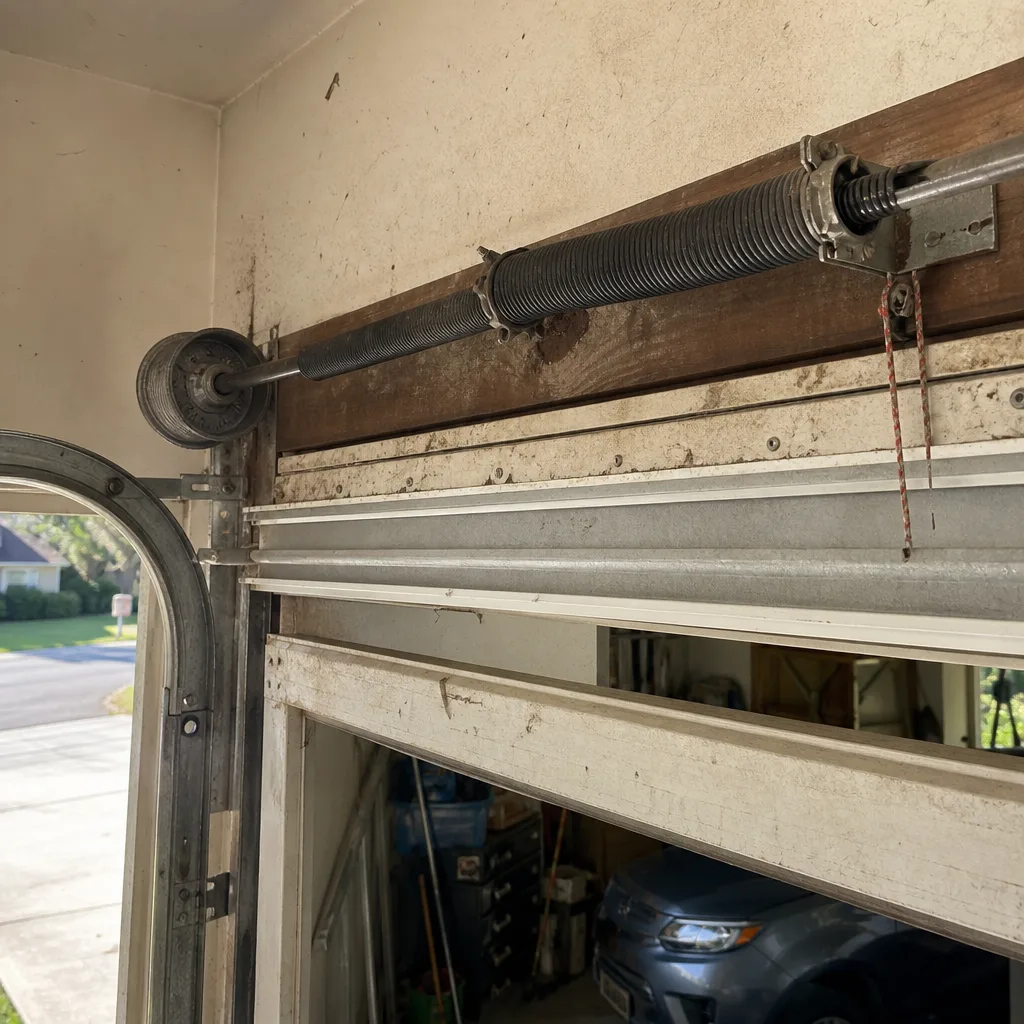 Before
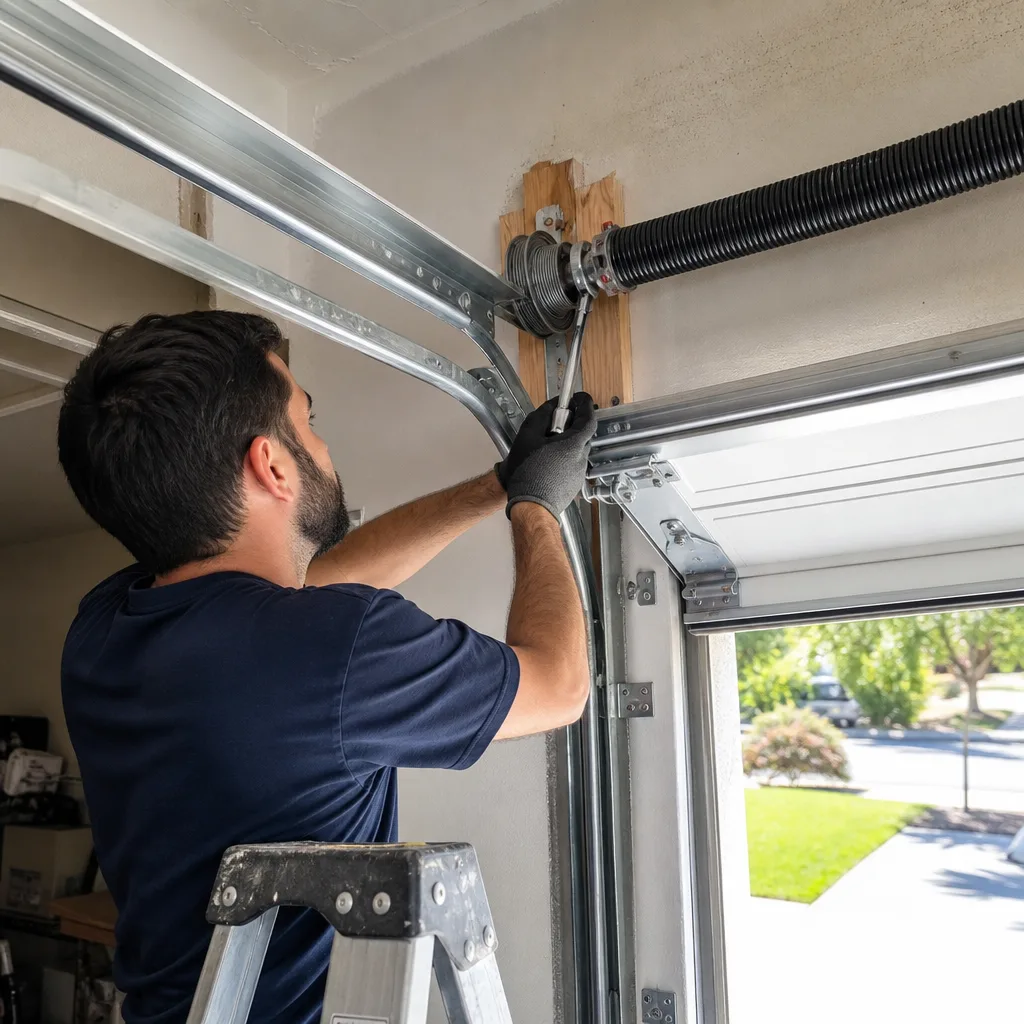 After
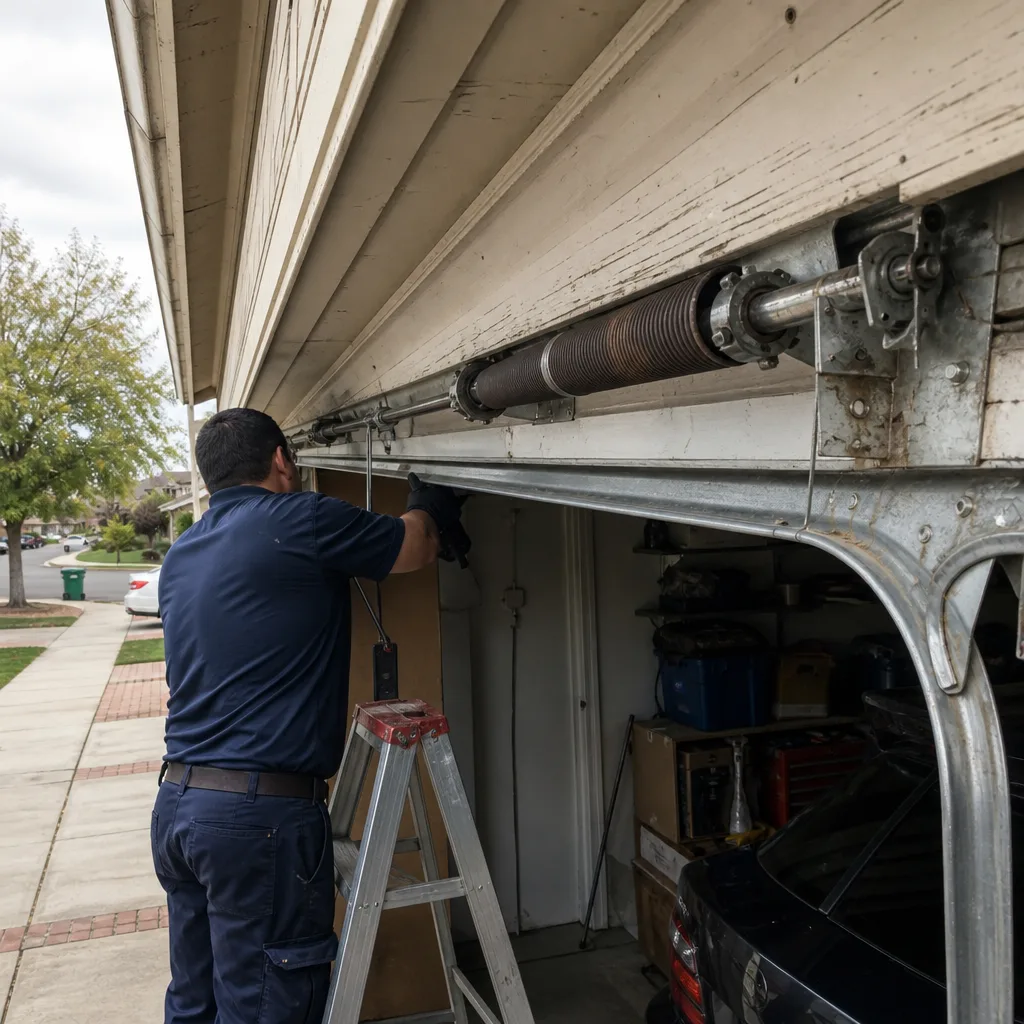 Before
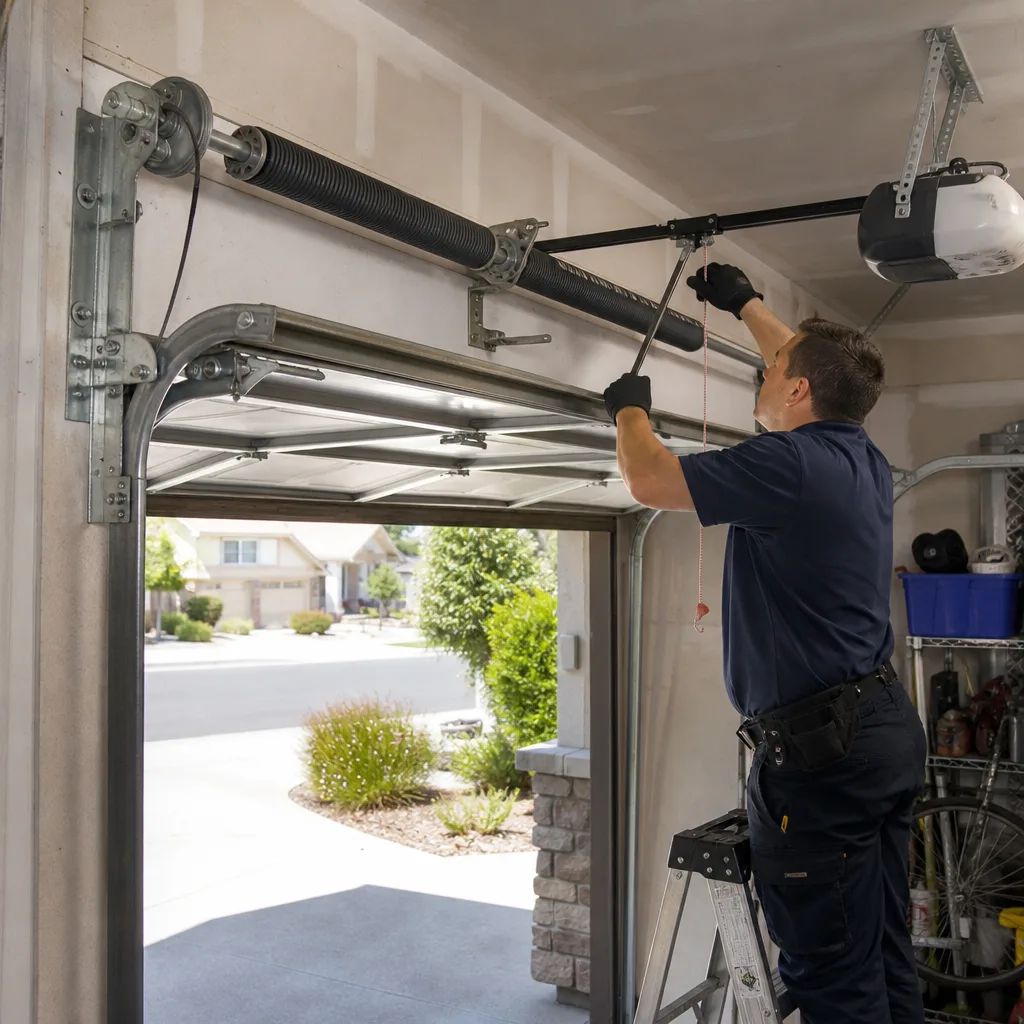 After
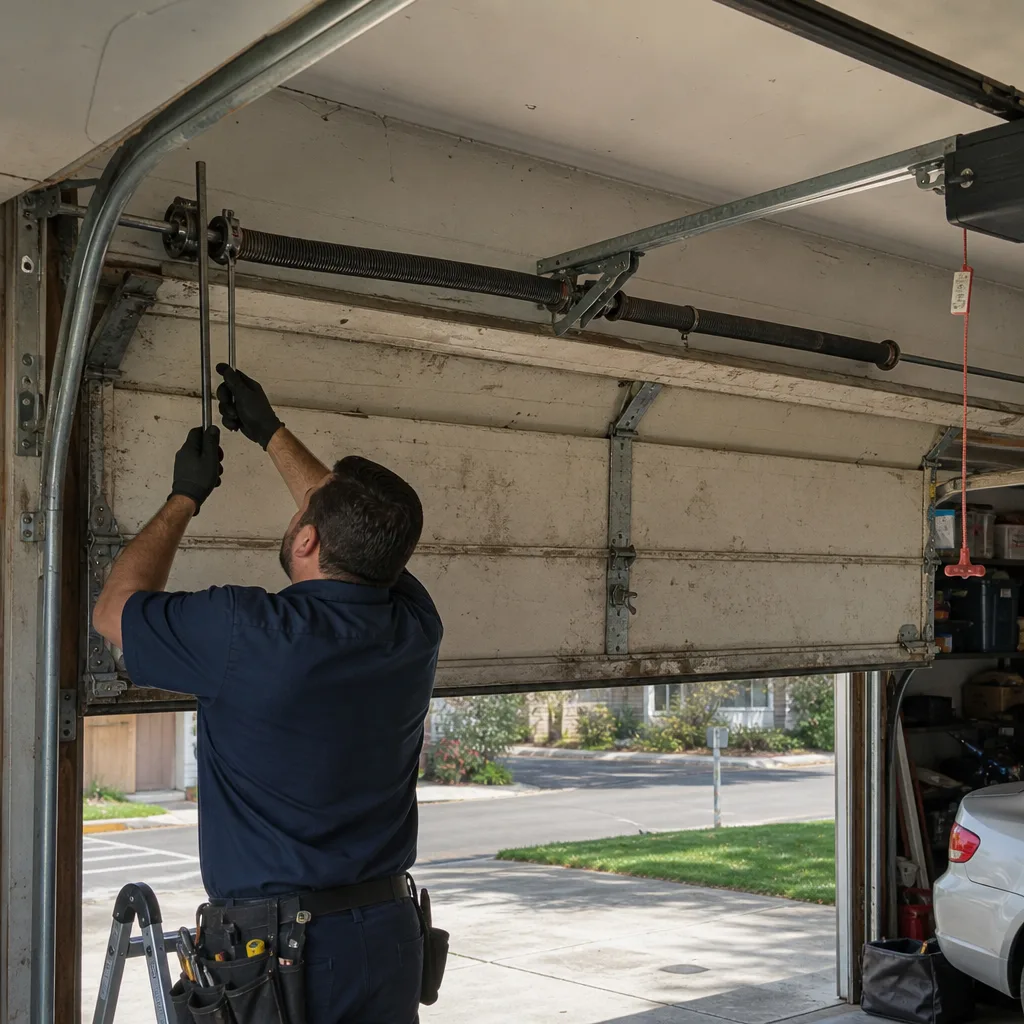 Before
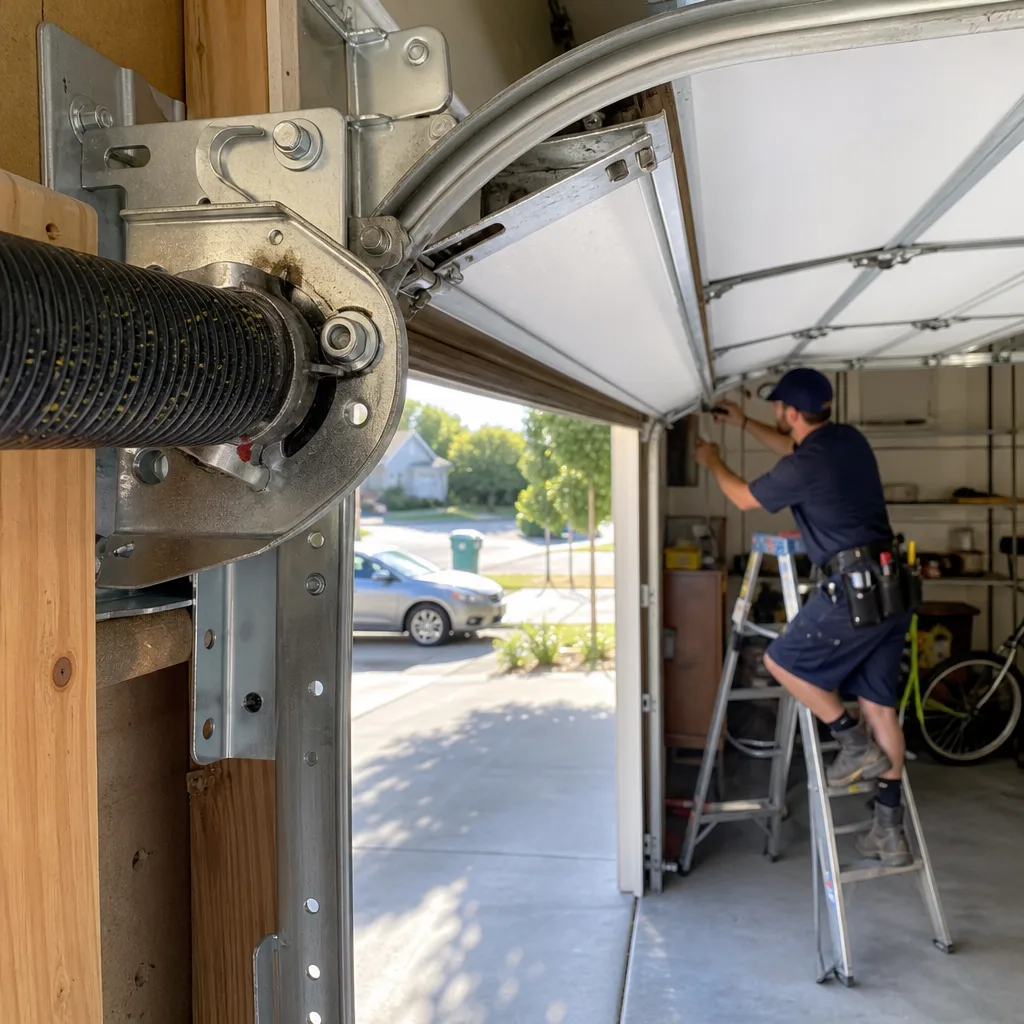 After
When to Call a Professional
Call a professional when a spring snaps (the sound is unmistakable and the door becomes dangerously heavy), when your door comes off its tracks, when the safety sensors fail and the door reverses or won’t close, or when you notice the door leaning to one side while opening. These are not DIY repairs, and spring tension in particular can cause serious injury if handled incorrectly. If you’re in Sacramento, Carlton Garage Door Repair offers free estimates and same-day service on most repairs. Call (833) 589-6808 to schedule a diagnostic visit. The Carlton Garage Door Repair home page has our full service breakdown.
Frequently Asked Questions
A single spring replacement in Sacramento typically runs between $180 and $340, including parts and labor. When one spring breaks, we replace both if they’re the same age, since the second spring usually fails soon after the first. Call (833) 589-6808 for an exact quote.
Most spring, cable, roller, and track repairs can be completed same-day, since our technicians carry the common parts for multiple brands on the truck. Panel replacement and custom door work typically require a follow-up visit because specific panels are ordered to match the existing door. Call (833) 589-6808 to check availability for your exact issue.
A 24-gauge steel door with at least a 2-inch polyurethane insulated core handles Sacramento’s heat best while resisting panel warping and denting. Wood composite is a good choice if you want the wood look without the expansion and contraction problems real wood develops in this climate.
No. We quote the full price before any work starts, and that number doesn’t change unless you request additional work beyond the original scope. If we find something unexpected, we stop and discuss it with you before proceeding.
Yes. We service Chamberlain, Genie, LiftMaster, and other major opener brands regardless of who installed them or where they were purchased. Opener repair is its own specialty we handle as a core service.
A well-maintained steel door in Sacramento typically lasts 15 to 20 years. Springs last 7 to 10 years depending on cycle count, and openers last 10 to 15 years with proper maintenance. Sacramento’s heat and dust typically shorten these lifespans by about 15% compared to coastal California.
The Bottom Line
Your garage door in Sacramento works harder than it would in almost any other California city. The heat stresses the steel, the dust degrades the springs, and the shifting clay soil knocks the frame out of square over time. The smartest approach is preventive: annual maintenance before the rainy season, prompt attention to alignment issues, and a preference for insulated steel or wood composite when replacement time comes. Find a technician who speaks multiple brand languages and who treats opener repair as a real specialty rather than an afterthought. When you need help in Sacramento, we’re here. Call (833) 589-6808 for a free estimate.
Written by the team at Carlton Garage Door Repair, serving Sacramento since 2012.