

Last updated October 31, 2026
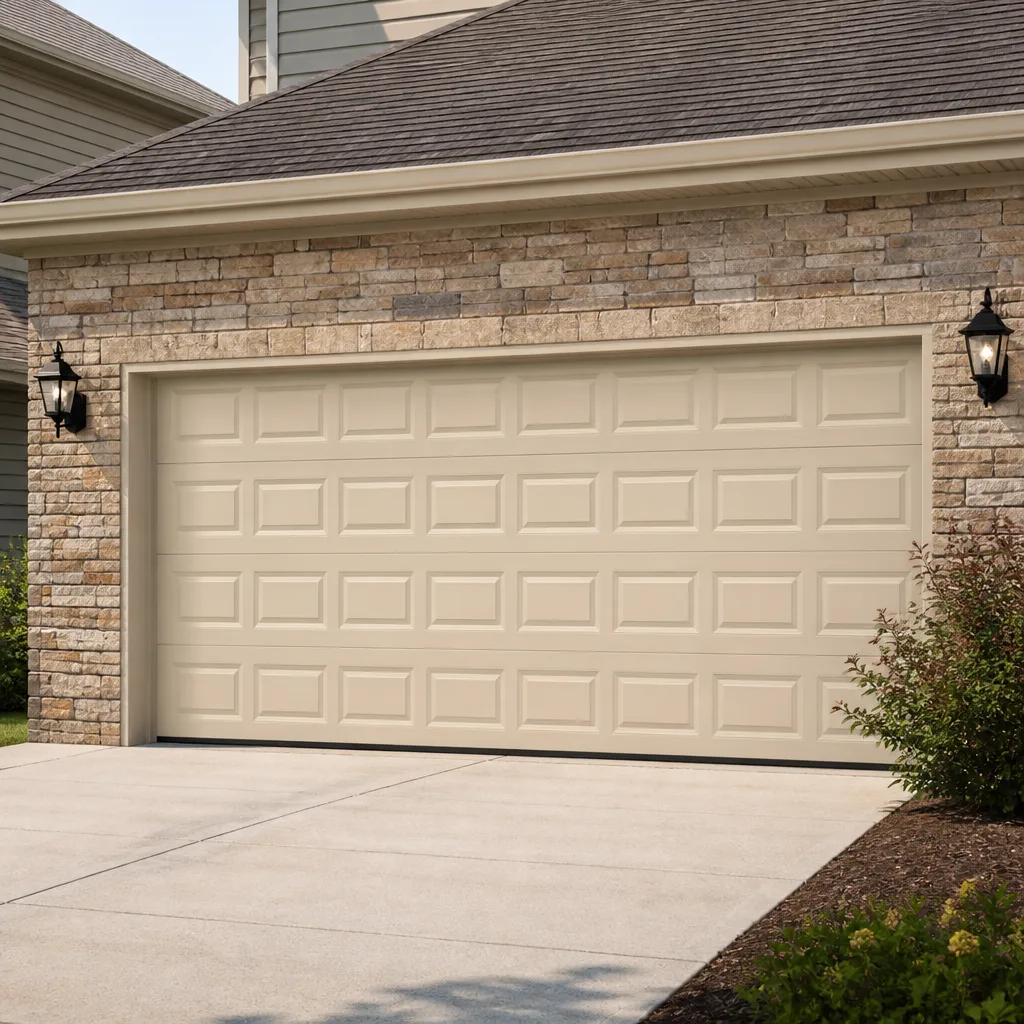 Raised-panel steel
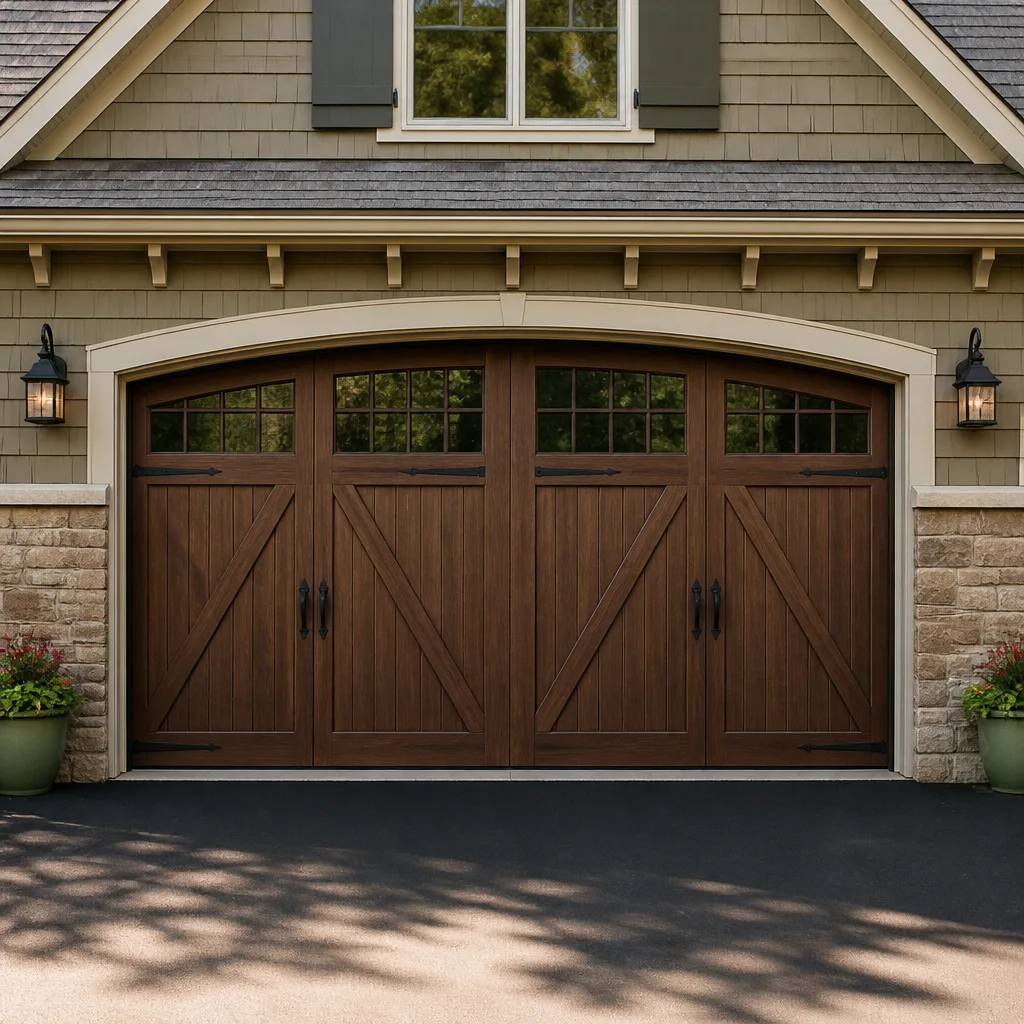 Carriage house
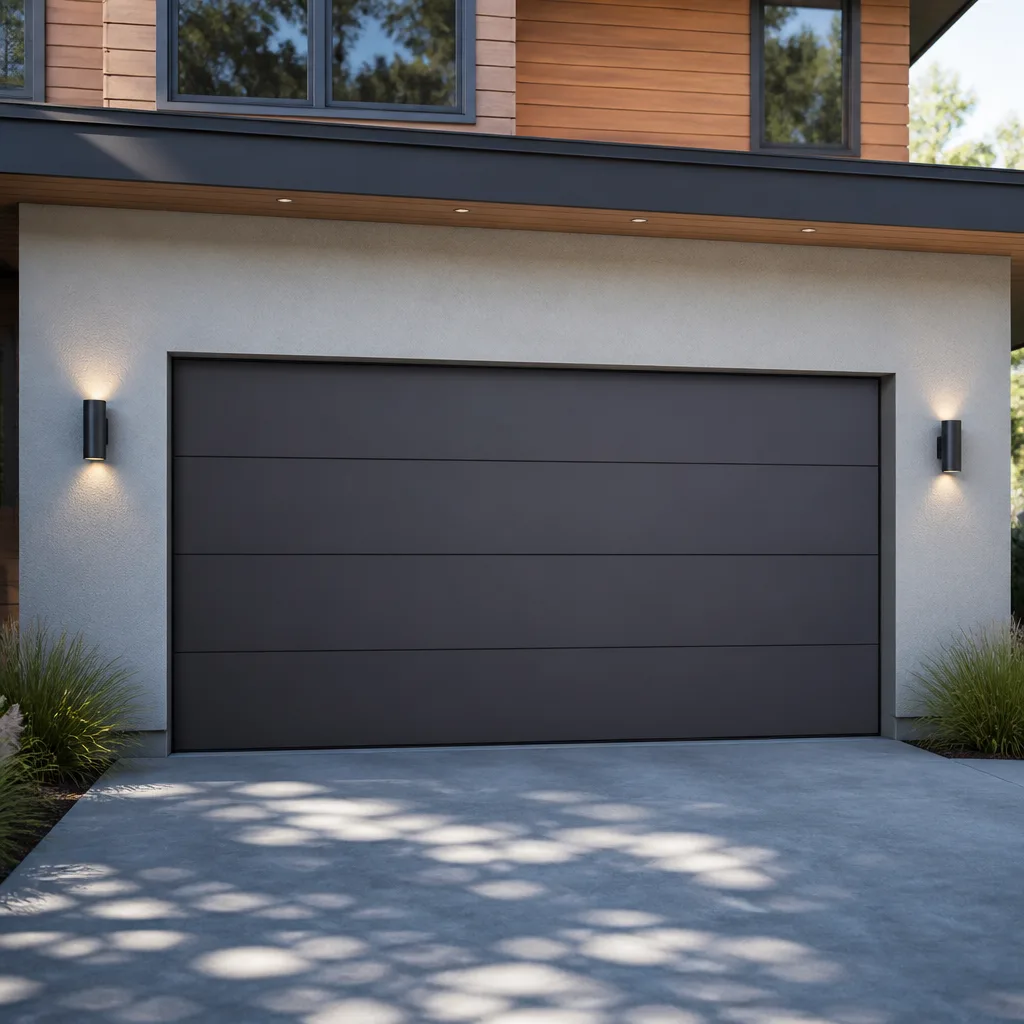 Modern flush
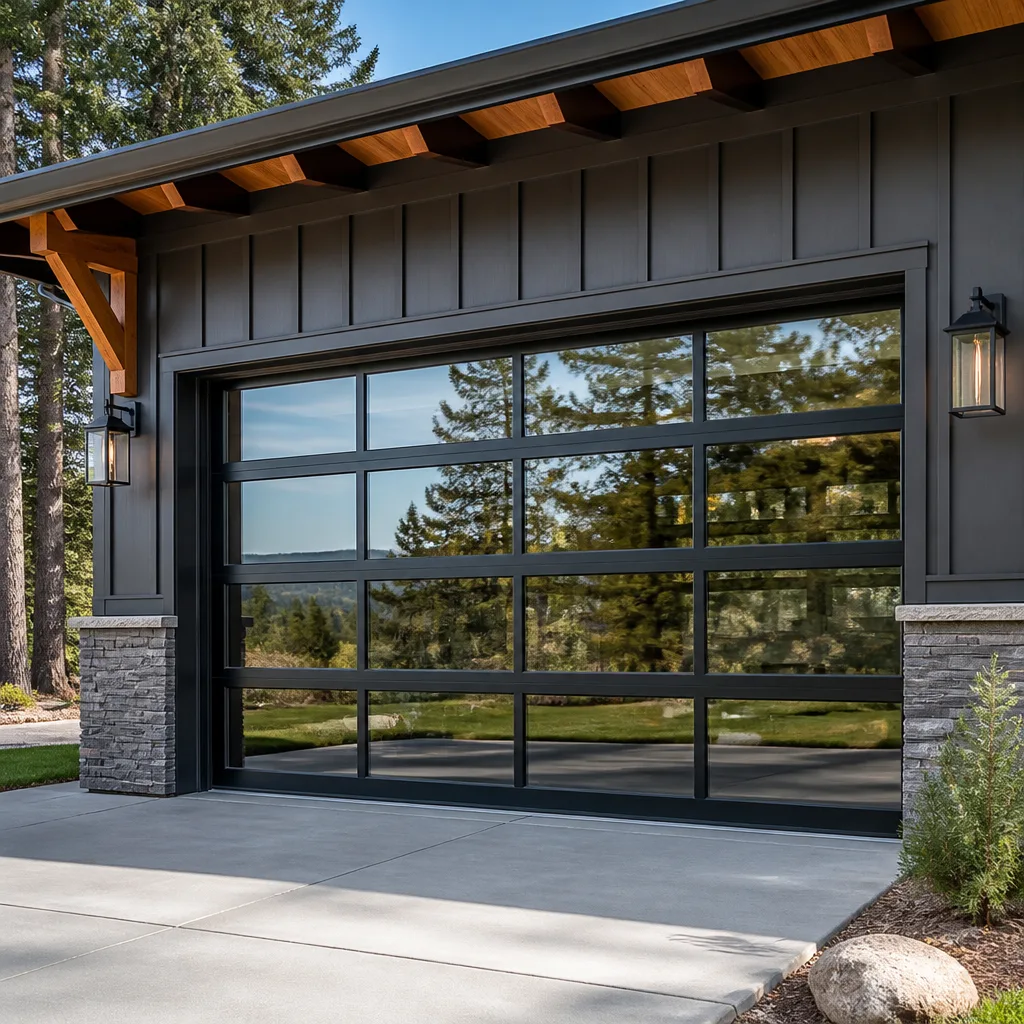 Full-view glass
 LiftMaster openers
 Chamberlain openers
Full 25-point door and opener safety check with every visit - springs, cables, rollers, tracks, and your LiftMaster or Chamberlain opener included
You get a price before we start. It does not change when the truck arrives.
Get your free estimateThe Complete Garage Door Repair Guide for Sacramento Homeowners
Most garage door failures in Sacramento don’t happen randomly. They spike in July and August, when temperatures regularly hit 105°F and metal components expand beyond their calibrated tolerances. If your door acted up this summer, the heat likely started the damage months earlier. What follows is a full map of how garage doors fail in Sacramento specifically, what those failures cost to fix, and how to tell the difference between a repair that can wait and one that needs a technician at your house today.
Quick Answer
Garage door repair in Sacramento typically costs $180 to $340 for common fixes like spring replacement, cable repair, or track realignment, with opener repairs running $150 to $300. Most repairs can be completed same-day by a technician carrying parts for all major brands. Here’s the full breakdown, including what fails most often in Sacramento’s heat and how to avoid paying twice for the same repair.
Styles & brands we work with
Table of Contents
- How Sacramento’s Climate Damages Garage Doors
- What Actually Breaks: The Five Most Common Failures
- Repair vs. Replace: The Real Cost Thresholds
- Opener Problems Are Their Own Category
- What a Legitimate Repair Visit Should Include
- Sacramento Season-by-Season Maintenance Checks
- Common Mistakes to Avoid
- When to Call a Professional
How Sacramento’s Climate Damages Garage Doors
Sacramento’s climate is hard on garage doors in ways that generic repair guides never mention. We’re not dealing with coastal fog or mountain snow. We’re dealing with weeks of triple-digit heat, fine dust from the valley, and temperature swings that can drop 40 degrees overnight when Delta breezes roll in.
The primary culprit is thermal expansion. Steel springs, tracks, and cables all expand in heat. When your door sits closed all afternoon in a west-facing garage in Land Park or East Sacramento, the metal inside that garage can hit 130°F or more. The springs stretch slightly. The cables settle. Then the sun goes down, the Delta breeze kicks in, and everything contracts. Over a single summer, that expansion-contraction cycle happens hundreds of times. The result is fatigue damage that shortens the lifespan of torsion springs from the national average of 10,000 cycles to what we routinely see in Sacramento: failure at 7,000 to 8,000 cycles, sometimes less on doors that face direct afternoon sun.
Dust compounds the problem. Sacramento’s fine valley dust is finer than what you’ll find in most of the country, and it works its way into roller bearings, hinge pins, and the nylon bushings inside the track. The dust acts as an abrasive, accelerating wear on moving parts even when the door isn’t used heavily. Homes in Rio Linda and Antelope, near open fields and the American River Parkway, see this worse than homes in the central city grid.
The third factor is diurnal temperature swing. Sacramento regularly sees 105°F days followed by 62°F nights. That’s a 43-degree swing, and metal doesn’t like it. Older doors with steel rollers and unsealed bearings are especially vulnerable because the parts are already worn, and the thermal cycling just speeds up the failure.
What this means in practical terms: a garage door spring in Sacramento will not last as long as the manufacturer’s warranty period suggests. If a spring is rated for 10,000 cycles and you use your door four times per day, that’s roughly seven years nationally. In Sacramento, plan for five to six.
What Actually Breaks: The Five Most Common Failures
Here are the five repairs we see most frequently in Sacramento, in order of frequency. Each one has a specific failure signature and a specific urgency level.
1. Torsion Spring Failure
The problem: Torsion springs are the counterweight system mounted above the closed door. They hold the tension that makes lifting a 150-pound door feel like lifting 10 pounds. When one snaps, it sounds like a gunshot inside the garage.
The Sacramento angle: Heat fatigue causes springs to lose tension gradually before they snap. A spring that’s lost tension makes your opener work harder, which shortens opener lifespan too. The failure often happens on the first cold morning after a hot stretch, when the metal contracts suddenly.
Cost range: $180 to $340 for both springs, including installation. Always replace both springs, even if only one snapped. The surviving spring is equally fatigued and will fail soon. A technician who suggests replacing only one is cutting your cost short-term and guaranteeing a second service call.
Urgency: Immediate. Do not operate the door. Do not attempt to lift it manually if you have a single-spring system and the door is heavy. If you have a two-spring system, one good spring can hold the door, but you should call for repair right away. High-tension springs are genuinely dangerous to work on. A spring under full tension carries enough stored energy to cause serious injury if mishandled. This is a trained-professional-only repair, no exceptions.
2. Cable Fraying and Breakage
The problem: Lift cables run along both sides of the door and attach to the bottom brackets. They carry the door’s weight when the springs do their job. Cables fray over time, then snap.
The Sacramento angle: Fine dust gets into the cable strands and acts like sandpaper. Combined with the thermal expansion cycles, cables in Sacramento garages fray years before a homeowner notices. The telltale sign is a door that’s slightly crooked when opening or a visible strand of wire poking out along the cable path.
Cost range: $95 to $160 per cable, and most technicians will recommend doing both at once since they wear evenly.
Urgency: Next-day. A frayed cable can snap without warning, and when it goes, the door can slam down unevenly. If the cable has snapped, call same-day. Do not try to re-string a cable yourself. The tension on the springs connects directly to the cable system, and a cable under load can whip back with serious force.
3. Roller and Hinge Wear
The problem: Rollers ride inside the track and guide the door up and down. They wear out, get noisy, and eventually seize. Hinges connect the door panels and take all the flexing.
The Sacramento angle: Valley dust grinds down roller bearings fast. We see Sacramento homeowners replacing rollers at twice the rate of similar homes in cooler, cleaner climates. Nylon rollers last longer than steel in dusty environments because they don’t require lubrication the same way.
Cost range: $10 to $30 per roller for replacement, plus labor. A full roller replacement on a double door typically runs $120 to $200 including labor.
Urgency: Schedule within a week or two. Worn rollers won’t cause a catastrophic failure, but they put strain on every other component and accelerate wear on the opener.
4. Track Misalignment
The problem: The vertical and horizontal tracks must be perfectly aligned for the door to travel smoothly. Over time, bolts loosen, tracks shift, and the door starts binding or scraping.
The Sacramento angle: Sacramento’s older housing stock, especially in Midtown and Curtis Park, often has garages that were built in the 1920s through 1950s. Those wooden door frames shift with seasonal moisture changes, which slowly pushes tracks out of alignment. Newer homes in Natomas and Elk Grove have their own issue: concrete slab settling on expansive soils, which shifts the entire door frame.
Cost range: $85 to $175 for track realignment and bolt tightening.
Urgency: Same-week. A binding door puts strain on springs, opener, and hinges. If you hear scraping or see the door pause partway up, get it checked before the strain causes a more expensive failure.
5. Panel Damage
The problem: Dents, cracks, or warped sections in the door panels themselves.
The Sacramento angle: Sacramento sees its share of door dings from bikes, lawn equipment, and the occasional wayward basketball. But the more common cause in this region is UV-related: steel doors with older paint jobs develop micro-cracks in the coating, moisture gets in during winter, and rust forms. Wood doors in older Sacramento neighborhoods warp from the dry-season/wet-season cycle. Clopay and Amarr doors with modern factory finishes resist this well; doors from the 1990s and early 2000s, not so much.
Cost range: Individual panel replacement runs $150 to $400 depending on the panel size and door style. If the door is over 15 years old and multiple panels are damaged, replacement may be the smarter financial move.
Urgency: Non-emergency unless the panel damage affects the door’s structural integrity or creates a security gap. Even then, a next-day appointment is usually fine.
Key Takeaways: Failure Urgency at a Glance
- Immediate (call today): Broken torsion spring, snapped cable, door off track, door won’t close and garage is unsecured.
- This week: Frayed cable, binding track, loud grinding from opener, door closing unevenly.
- This month: Worn rollers, noisy operation, minor panel cracks, opener running but door moving sluggishly.
Repair vs. Replace: The Real Cost Thresholds
Here’s the honest math on when to repair and when to replace. No upsell pressure. Just the numbers.
The $500 Rule of Thumb
If a single repair estimate exceeds $500, and your door is more than 12 years old, replacement becomes worth considering. That’s not because the repair isn’t worth doing. It’s because a door of that age is statistically likely to need another major repair within 18 to 24 months.
The Component Availability Factor
Some older doors use springs, hinges, or roller sizes that are no longer in production. A homeowner with a 1990s Wayne Dalton door, for example, may find that specific bottom brackets or hinge assemblies are no longer manufactured. A technician can fabricate a workaround, but the repair cost goes up. When parts availability becomes a factor, replacement starts looking better.
The Age-Based Reality Check
- Door under 8 years old and otherwise functioning: Repair makes sense in nearly every scenario. Components still have significant life remaining.
- Door 8 to 14 years old: Repair if the estimate is under $500 and the springs are in reasonable shape. Replace if the estimate exceeds $500 or the door shows multiple simultaneous failures.
- Door over 14 years old: Lean toward replacement for any major repair. Even if the current issue is isolated, other components are near the end of their lifespan. If you’re planning to stay in the home for 5 or more years, a new door pays for itself in avoided repair calls and improved insulation.
The Insulation Factor
This is a Sacramento-specific consideration that doesn’t get enough attention. An insulated garage door makes a significant difference in a Sacramento summer, especially if your garage is attached to your house or if you park cars in it. Older, uninsulated steel doors can turn a garage into a 130°F box in August, which radiates heat into adjacent rooms. If your door needs major repairs anyway, upgrading to an insulated model is a rational investment, not an upsell. A Garage Door Installation in Sacramento with proper insulation can drop garage temperatures by 15 to 20 degrees in peak summer.
When Replacement Is Clearly Better
- Both springs have failed and the door is 14+ years old.
- Multiple panels are rusted, cracked, or warped, and panel replacement cost exceeds $600.
- The door frame itself is sagging in a way that requires structural work beyond door repair.
- You want insulation, a quieter opener, or improved security, and the current door needs $300+ in repairs anyway.
- Manufacturer parts for your door model are no longer available, and the repair would require custom fabrication.
If you’re on the fence, a legitimate technician will give you both numbers: the repair cost and the replacement cost, with no pressure either way. Get that in writing.
Opener Problems Are Their Own Category
Garage door openers fail differently than doors themselves. And in our experience across Sacramento, opener problems are misdiagnosed more often than any other garage issue. A door that’s “broken” is frequently a door that’s fine, with an opener that needs attention.
The motor and gear assembly inside a LiftMaster or Genie opener wears out eventually. That’s normal. The motor drives a plastic or metal gear that meshes with the drive chain or belt, and that gear strips after years of use. In Sacramento’s heat, the grease inside the gear housing breaks down faster, which accelerates wear. A stripped gear sounds like the motor running but the door not moving.
Chamberlain openers, which share design DNA with LiftMaster, have a common failure point in the logic board. Heat doesn’t help. A door that opens randomly, fails to respond to the wall button, or loses its travel limits is often showing early logic board failure. Garage Door Opener Repair in Sacramento is its own specialty precisely because these problems require diagnostic equipment, not just a wrench.
Here’s what a proper opener diagnostic includes:
- Force setting verification: The opener should reverse when it meets resistance. An incorrectly set force limit is dangerous, and it also indicates the opener hasn’t been serviced recently.
- Travel limit check: The door should fully close without slamming, and fully open without the opener straining.
- Sensor alignment check: The photo eye sensors at the bottom of the track must be aligned and clean. Dust from a Sacramento summer can coat the lenses and cause intermittent failures.
- Gear wear inspection: The technician should open the unit and inspect the drive gear if the motor runs but the door doesn’t move.
- Logic board test: For smart openers with myQ or Aladdin connectivity, the board should be tested for consistent signal and correct firmware behavior.
Opener replacement typically runs $350 to $600 for a quality chain-drive or belt-drive unit, installed. Smart features add $50 to $100. If your opener is over 15 years old, replacement is usually simpler and cheaper than board repair, because parts for older circuit boards become scarce.
What a Legitimate Repair Visit Should Include
Here’s what a straight-arrow Garage Door Repair in Sacramento visit looks like, versus a visit designed to maximize invoice size. If you’ve never watched a technician work before, this section is the one that saves you money.
Step 1: The Diagnostic Walkthrough
The technician should look at the entire system before touching anything. Door panels, springs, cables, rollers, tracks, opener, sensors, wall button. That takes three to five minutes. A tech who walks in and immediately knows what’s wrong without looking at anything is either a genius or a salesperson. Maybe both. Usually the latter.
Step 2: The Written Breakdown
You should receive a written or verbal breakdown that separates issues into three categories:
- Safety-critical: Must be fixed now. Broken springs, snapped cables, door off track, garage unsecurable.
- Recommended: Should be fixed soon to prevent bigger problems. Frayed cables, worn rollers, misaligned track.
- Optional: Nice to have. Cosmetic panel repair, upgraded insulation, smart opener features.
The price should be quoted and agreed upon before any work starts. If a technician discovers additional issues after beginning work, they should stop, call you over, and show you the problem before adding a dollar to the bill. This is the single biggest differentiator between an honest shop and a pressure operation.
Step 3: Parts Transparency
Ask to see the parts. A legitimate technician carries a truck stocked with common springs, cables, rollers, and brackets for a range of brands. If the part being replaced is available to look at, and the new one is in its original packaging, that’s transparent. If the parts are “in the truck” and never actually shown to you, be suspicious.
Step 4: Testing and Adjustment
After the repair, the technician should cycle the door several times, manually disconnect the opener to test the door’s balance manually, and check the safety reversal feature by placing a piece of wood in the door’s path. If the door doesn’t reverse on contact, the repair isn’t done.
Red Flags That Signal a Dishonest Quote
- Quote given without looking at the door, springs, or opener.
- A claim that you “definitely need” a new opener without any diagnostic testing.
- Pricing that “just went up” from what was mentioned on the phone.
- A request for full payment before work starts. Deposit on parts is standard; full prepayment is not.
- A door replacement recommendation based on age alone, with no examination of the actual condition of the door.
Honest shops don’t play games with timing or price. We tell you the number, you approve it, we do the work. The end.
Sacramento Season-by-Season Maintenance Checks
Garage doors don’t need a lot of upkeep, but what they do need varies by Sacramento’s seasons. Here’s the four-season checklist we recommend to every homeowner, based on what we see in garages across Citrus Heights, Arden-Arcade, Elk Grove, and the city’s older neighborhoods.
Spring: The Post-Winter Inspection
- Check cables for fraying. Winter moisture can start rust on cable strands.
- Test the door balance by disconnecting the opener and lifting the door manually. It should lift smoothly and stay in place at mid-height.
- Clean the photo eye sensors. Pollen and dust accumulate quickly in Sacramento springs.
- Lubricate rollers, hinges, and springs with a silicone-based lubricant. Avoid WD-40, which attracts dirt.
Summer: The Heat Stress Watch
- Listen for changes in opener sound. A straining motor in July may be working against heat-expanded parts.
- Check the door’s operation in the afternoon heat versus the morning. A door that binds at 3 p.m. but runs fine at 8 a.m. has a thermal expansion issue developing.
- If you hear popping or creaking from the springs, schedule an inspection before the problem becomes a failure. Spring failure peak happens in late July and August.
- Keep the garage ventilated if possible. Sacramento’s 105-degree days turn enclosed garages into ovens that accelerate wear on everything metal.
Fall: The Proactive Fix Season
Fall is the smartest time to do preventive repairs in Sacramento. The extreme heat is over, winter hasn’t arrived, and you can address issues before they become emergencies.
- Have a technician replace worn springs before they snap. If your springs are 5+ years old, have them measured for tension loss.
- Replace rollers that show visible wear or make grinding noises.
- Check weatherstripping on the bottom of the door and replace if cracked. Winter rains will find every gap.
- Test the auto-reverse safety feature. This is the single most important safety check you can do, and it takes 60 seconds.
Winter: The Minimal-Intervention Season
Sacramento winters are mild compared to most of the country, but the cold snaps matter.
- Do not force a door that’s frozen shut. Sacramento rarely sees ice, but morning frost on metal components can create temporary binding that resolves as the day warms.
- Keep rollers and hinges lubricated. Dry winter air plus accumulated valley dust equals grinding parts.
- If your door is uninsulated and you notice condensation on the inside, consider insulation. Moisture accelerates rust and shortens component life.
Common Mistakes to Avoid
- Replacing only one spring when both are equally old. Torsion springs wear in pairs, and they fail in pairs. The surviving spring from a pair that’s already failed once will fail within 12 to 18 months, and you’ll pay for two service calls instead of one.
- Ignoring opener sounds until the door stops moving. A grinding noise from the opener is the gear wearing out. It’s a $40 part that becomes a $300-plus opener replacement if the gear seats incorrectly and damages the motor shaft.
- Using generic spray lubricant on everything. WD-40 and similar products are solvents, not lubricants. They clean and then evaporate, leaving parts drier than before. Use silicone-based garage door lubricant only.
- Disconnecting the opener to “test” the door without knowing what you’re doing. On a door with a broken spring, manually lifting the door is dangerous. The full weight of the door comes down on you. If you suspect spring trouble, leave the door alone and call a professional.
- Assuming a crooked door is “just an old door.” A door that’s slightly uneven usually indicates cable wear or spring tension imbalance. Both are fixable. Neither gets better on its own.
- Delaying spring replacement to “save money.” A broken spring forces the opener to work against the full door weight. The opener’s motor and gear overheat, and a $280 spring repair becomes a $700 spring-plus-opener repair.
- Buying parts online and asking a technician to install them. This creates warranty issues, fit problems, and liability questions. If the online spring is the wrong size or the wrong cycle rating, the technician is on the hook for a part they didn’t source. Most reputable repair companies won’t install customer-supplied parts, and for good reason.
When to Call a Professional
Call a professional when the problem is in the springs, the cables, or the opener’s motor assembly. These components are under tension or powered, and the consequences of a mistake are serious. A garage door spring under load carries enough energy to cause severe injury, and an opener’s gear assembly can crush fingers or worse. If your door is off track, has a snapped cable, or shows spring damage, stop using it and call.
For everything else, a professional inspection is affordable and quick. A door that’s noisy, slow, or slightly crooked may not be an emergency today, but it’s telling you something. The sooner you listen, the cheaper the fix. Carlton Garage Door Repair offers free estimates in Sacramento. Call (833) 589-6808 and tell us what’s happening. We’ll diagnose it, quote it, and fix it right the first time.
See the difference
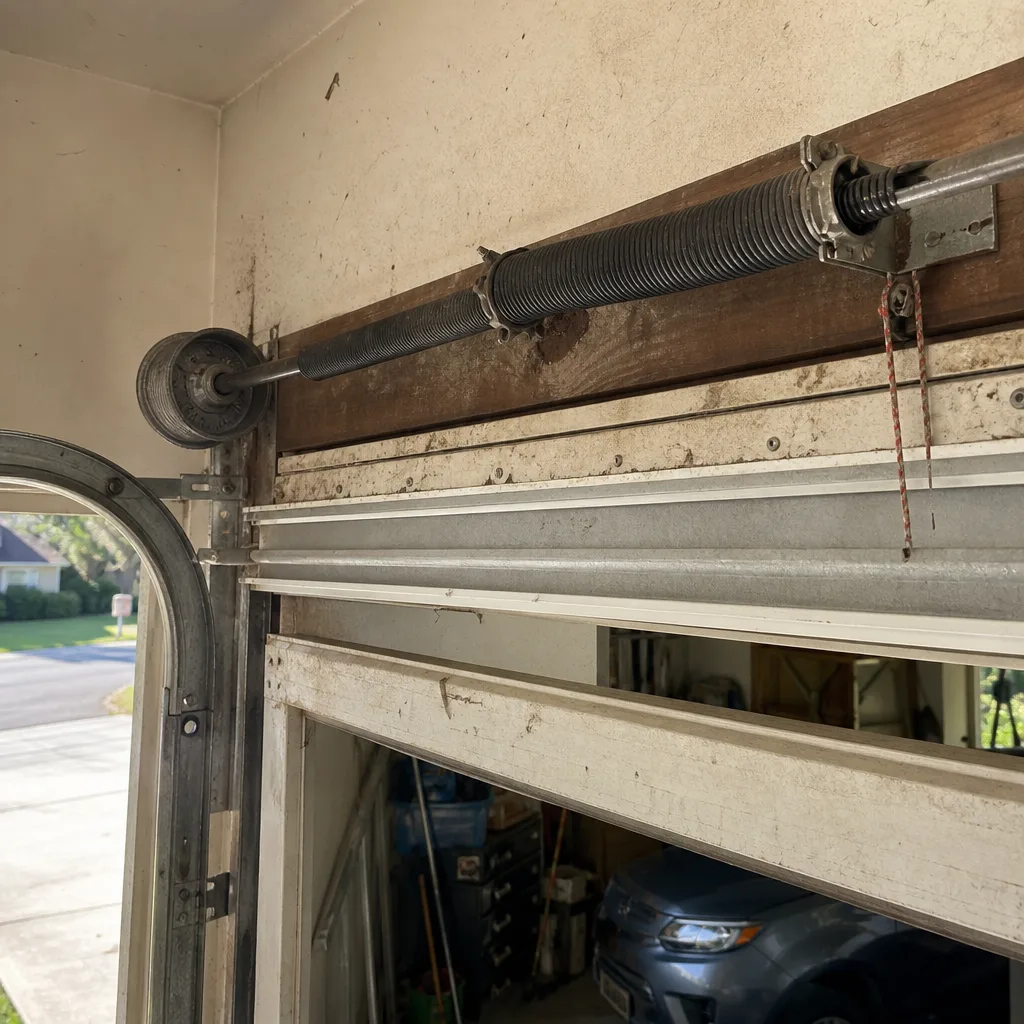 Before
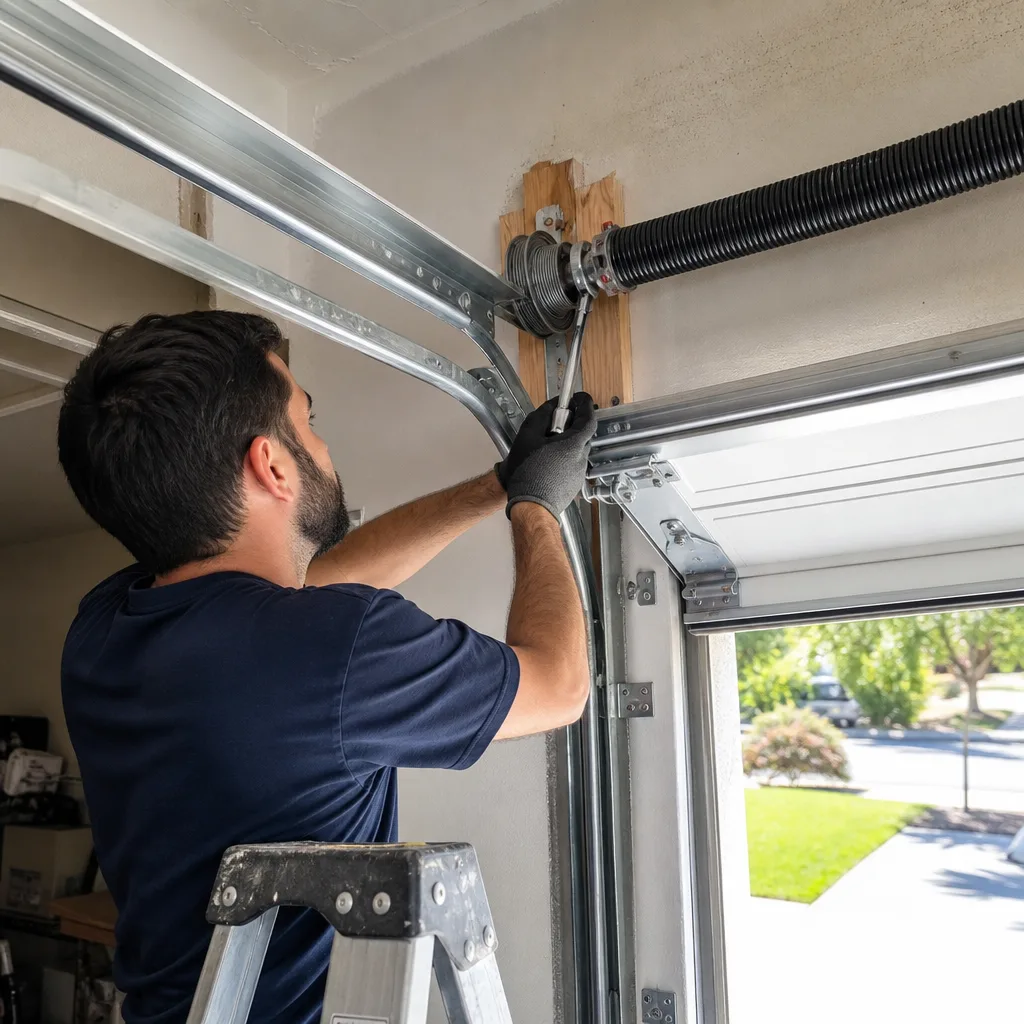 After
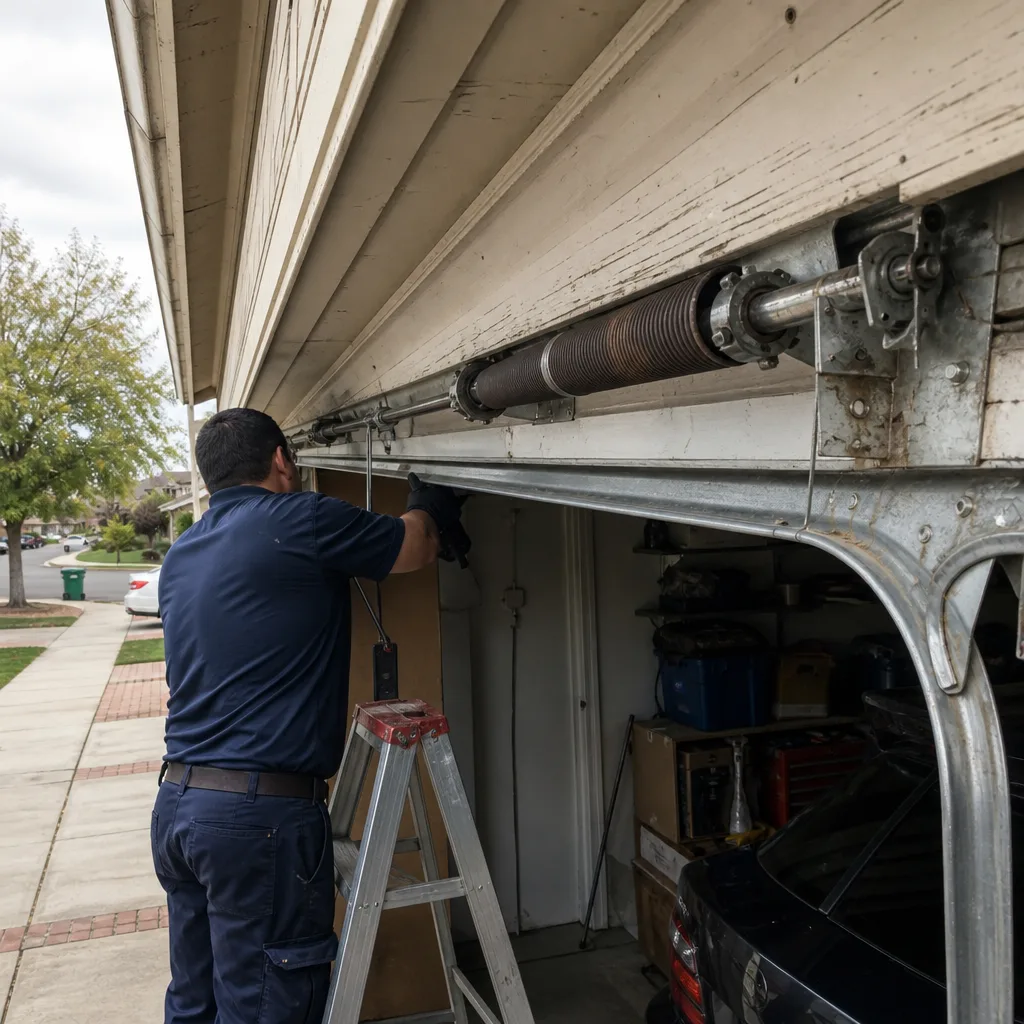 Before
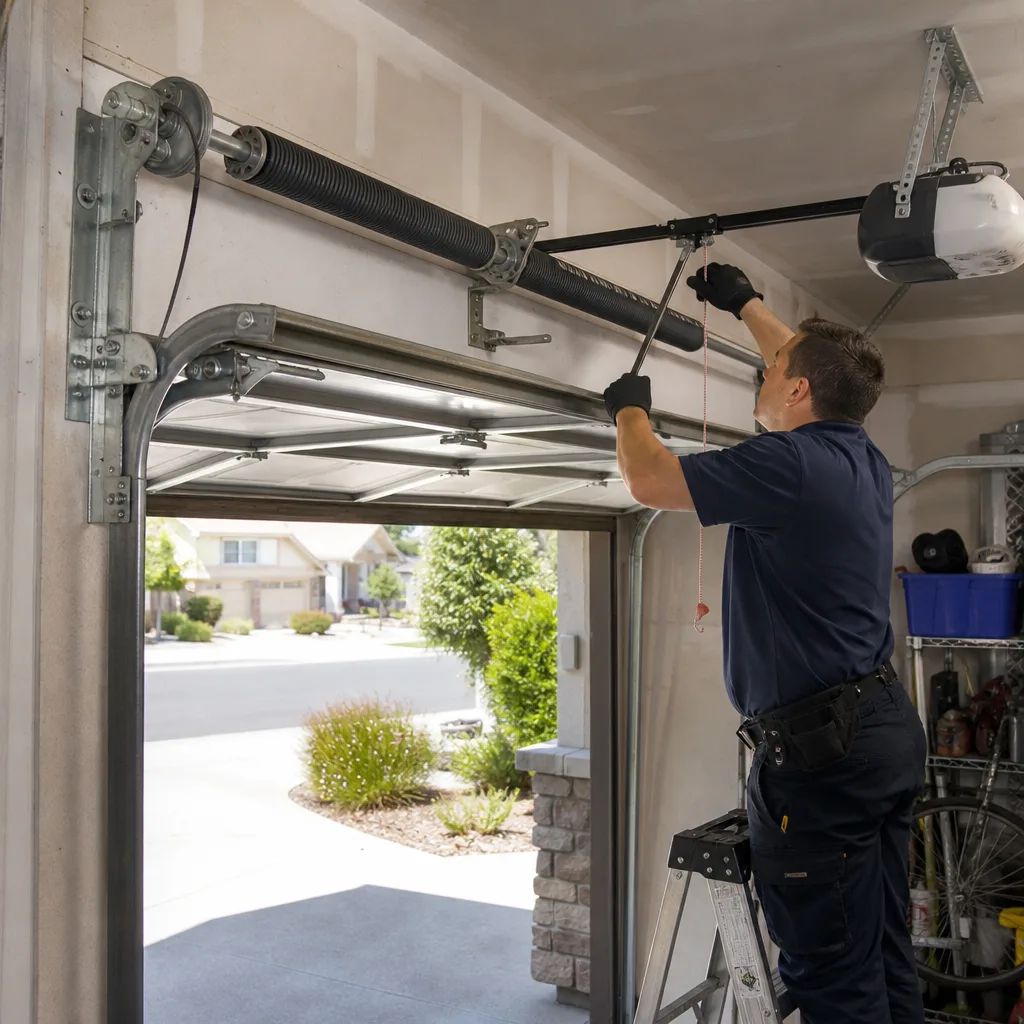 After
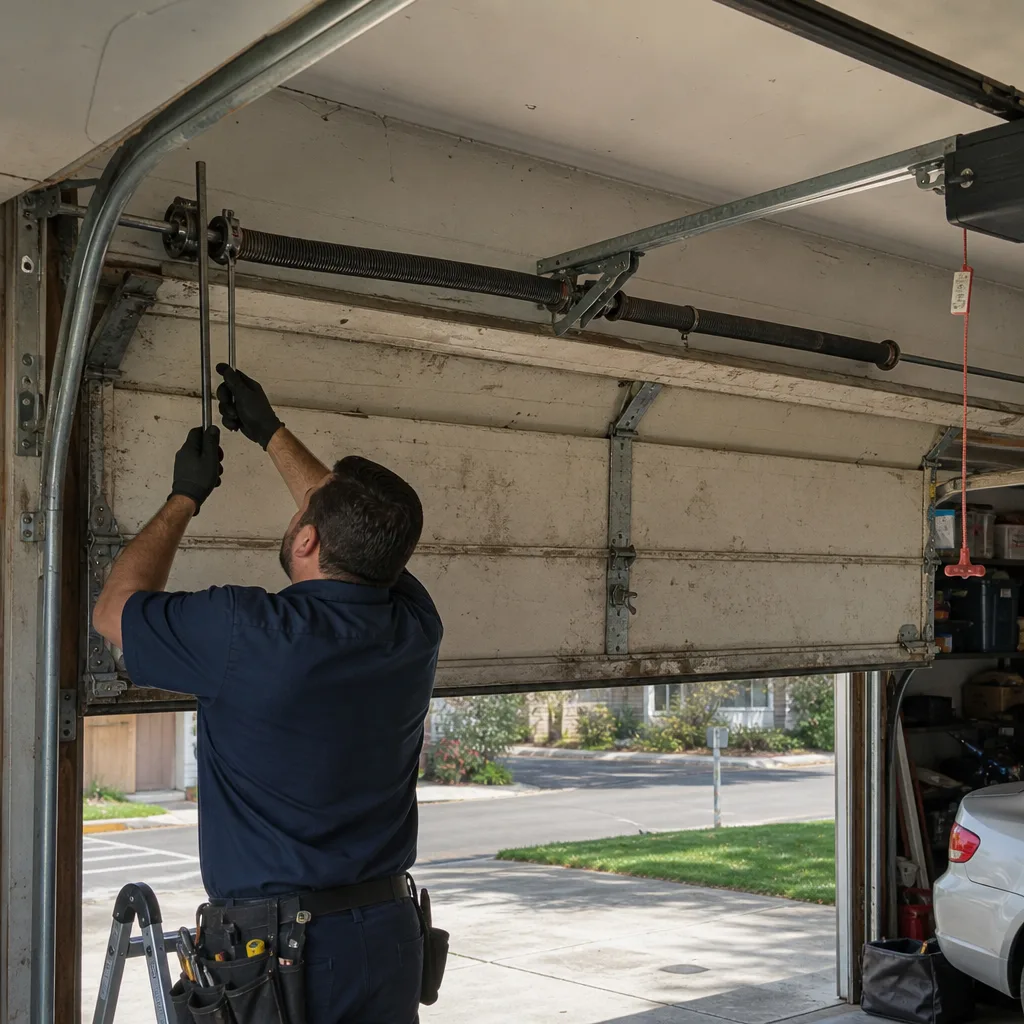 Before
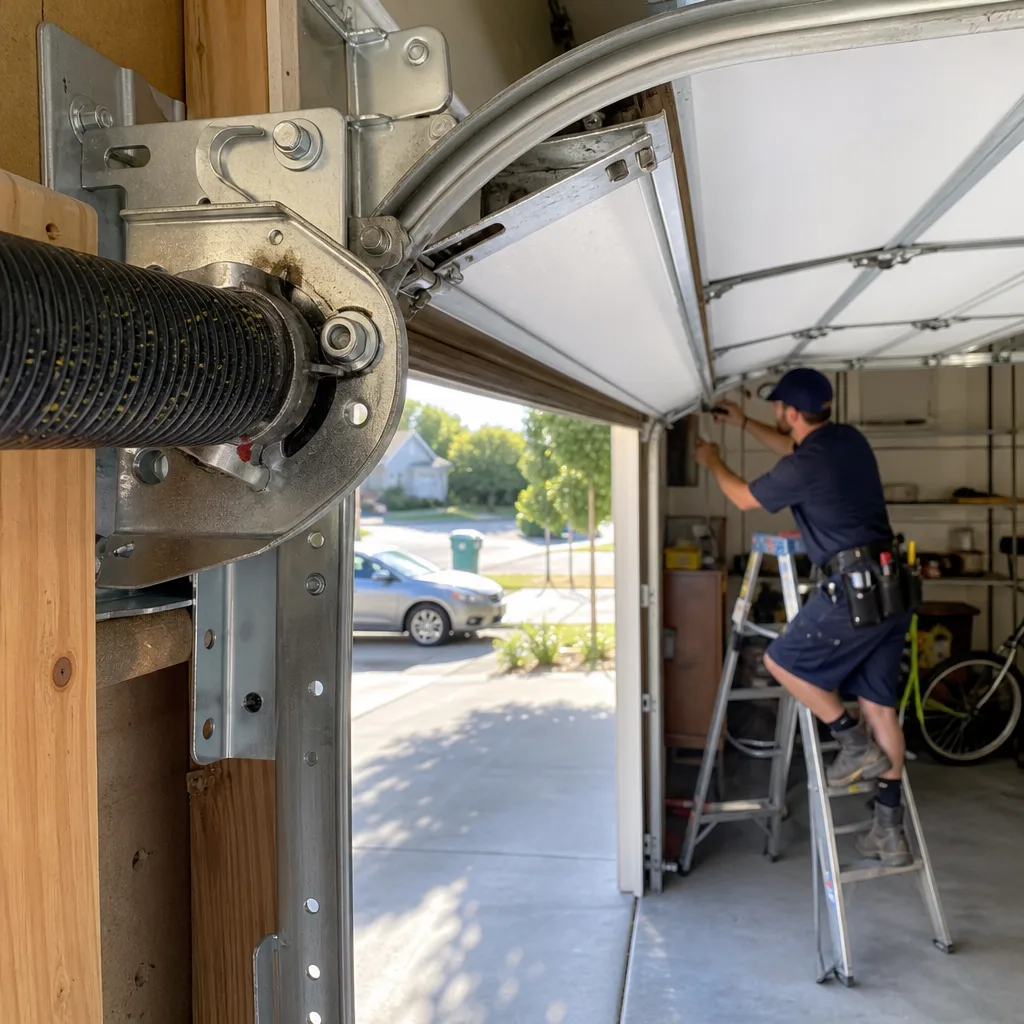 After
Frequently Asked Questions
How much does garage door repair cost in Sacramento?
Most garage door repairs in Sacramento cost between $180 and $340, depending on the specific failure. Spring replacement on a double door typically runs $280 to $340 for both springs, while cable replacement runs $95 to $160 per cable. Opener repairs run $150 to $300. Every quote is agreed upon before work starts, so the price is locked. Call (833) 589-6808 for a specific quote on your door, free.
Can you fix my garage door the same day?
Yes, for most common repairs. Carlton Garage Door Repair stocks parts for LiftMaster, Chamberlain, Genie, Clopay, Amarr, Wayne Dalton, Craftsman, and Raynor systems on the truck. Broken springs, snapped cables, and most opener issues are handled in a single visit. Call (833) 589-6808 in the morning and we’ll give you a realistic same-day or next-day window.
Will the price change once you see my door?
The price you’re quoted is the price you pay, unless we find a separate, additional problem while working. If that happens, we stop and show you the issue before adding anything to the bill. You approve the number before any additional work starts. No surprise invoices.
Do you carry the parts on the truck?
Yes. Our trucks are stocked with springs, cables, rollers, hinges, brackets, and opener components for the major brands. Most repairs are completed on the first visit without a parts run. For newer or less common door models, we’ll confirm parts availability before scheduling.
My garage door is making a grinding noise. What is that?
A grinding noise from a garage door usually means worn rollers, a gear inside the opener that’s stripping, or a spring that’s lost tension and is rubbing against the shaft. In Sacramento, dust accumulates inside the gear housing and accelerates wear. The exact cause requires a quick diagnostic, and most grinding noises are repairable for $150 to $300. Call (833) 589-6808 and describe what you’re hearing. We’ll tell you what’s likely and whether the repair can wait.
How long do garage door springs last in Sacramento?
Expect five to seven years in Sacramento, versus the seven to ten years most national averages suggest. The heat cycles and valley dust shorten spring lifespan here. If your springs are five years old and you use the door four or more times per day, have them measured for tension loss at your next tune-up. Replacement before failure is cheaper than replacement after, because a broken spring often damages cables and the opener.
Can I repair my garage door myself?
Some maintenance tasks are reasonable for a homeowner: lubricating rollers, cleaning sensors, checking weatherstripping. Spring repair, cable replacement, and opener work are not. Torsion springs store enormous energy, and cables under tension can whip with serious force. These are trained-professional repairs. If you’re not sure which category your issue falls into, call (833) 589-6808 and ask. We’ll tell you honestly if it’s something you can handle yourself or if you need us.
The Bottom Line
Sacramento’s garage doors fail in predictable ways, and almost all of them trace back to the same root causes: heat stress on springs, dust accumulation in moving parts, and delayed maintenance on aging components. The repairs that matter are the ones you deal with before they become emergencies. A spring replacement costs $280. A spring replacement plus a damaged opener and frayed cables costs $700 or more. The difference is often just attention and timing.
If your door is acting up, you don’t have to guess whether it’s serious. Call Carlton Garage Door Repair home at (833) 589-6808. We diagnose, we quote before any work starts, and we service the brand you already own. From a snapped spring to a full installation, we handle it without bouncing you between contractors.
Written by the team at Carlton Garage Door Repair, serving Sacramento since 2012.